Description
The history of the Hungarian Catholic community in Lorain (Ohio) fits seamlessly into the general pattern of the formation and development of the North American Hungarian diaspora, in which immigration at the end of the 19th century, rapid ecclesiastical and institutional organization, followed by successive phases of assimilation and institutional decline in the second half of the 20th century. Hungarians had been present in the city since the 1880s, a fact linked to the fact that Cleveland and its wider surroundings, as one of the centers of American industrial development, attracted a significant number of Central European immigrants, including Hungarians. In this context, the organization of the religious community served not only a pastoral function but also a role in preserving identity, as it constituted one of the most important institutional frameworks for maintaining the Hungarian language and culture.
The local Hungarian Catholic parish was established in 1890, when the first community structure was formed in honor of King Saint Stephen. This initial form did not yet have an independent parish framework, as pastoral care was provided by priests traveling from Cleveland. As was typical of the era, the faithful living in the diaspora only gradually reached the point where they could maintain their own priest and church. The period marked by the names of József Brunkala, Károly Böhm, Róbert Paulovits, Géza Messerschmidt, and Antal Hegyi was thus a transitional, missionary-style era that paved the way for the establishment of an independent parish.
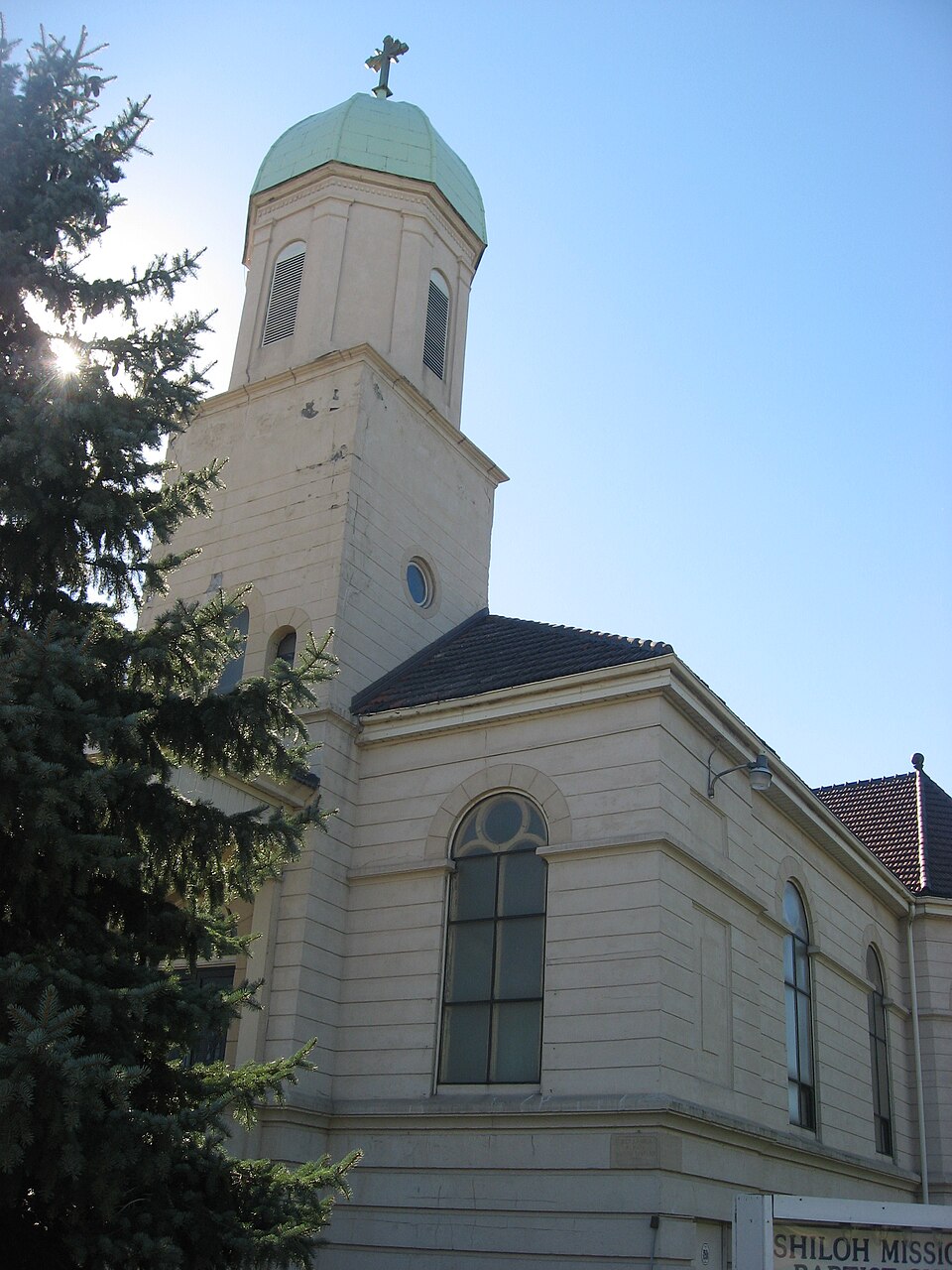
The decisive turning point came in 1904, when the diocesan leadership sent a permanent pastor to the community in the person of József Szabó. It was during his tenure that the key step toward institutionalization was taken: in 1905, the St. László parish was founded, organized specifically for Hungarian parishioners, and within a short time, by 1908, it had its own church. This phase of development is a typical example of the formation of Hungarian Catholic parishes in America, where gatherings in temporary, often English-speaking churches were quickly replaced by the establishment of independent, nationally oriented church institutions.
During the parish’s first decades, relatively frequent changes in pastors can be observed, which partly reflects the difficulties in consolidating the community’s organizational structure. A period of stability and development occurred during the parish priesthood of Endre Köller between 1914 and 1927, when significant construction projects and the founding of institutions took place. A new parish house and school were built at this time, and the Daughters of the Divine Savior became involved in education; a convent was also established for them. This period can be regarded as the institutional maturation of the community, when, alongside religious life, education and community organization also strengthened.
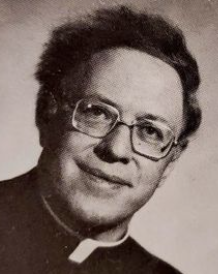
During the interwar and post-war periods, the parish’s operations became further stabilized. During Ernő Rickert’s long tenure as parish priest from 1927 to 1948, the community’s economic consolidation came to the fore, particularly through the settlement of debts arising from earlier construction projects and the development of the church’s surroundings. The presence of several assistant priests, as well as the growing emphasis on youth ministry, suggests that the community was still large and active at that time. In the decades following World War II, during the pastorates of Zoltán Demkó and then Sándor Demetzky, the parish functioned not only as a religious center but also as a cultural hub, as evidenced by the establishment of the Hungarian Museum of Folk Art in the church basement. Cardinal József Mindszenty’s visit in 1974 symbolically reaffirmed the ties between the diaspora and the motherland.
The richness of community life is demonstrated by the activities of various associations and societies, which covered religious, social, and cultural activities alike. These organizations not only provided a framework for religious practice but were also important tools for maintaining Hungarian identity. By the second half of the 20th century, however, the advance of assimilation became increasingly apparent, as evidenced by the decline of Hungarian-language pastoral ministry. In 1989, with the retirement of Sándor Demetzky, Hungarian-language parish life ceased, marking the end of an era.
The final phase of the church’s history can be understood within the context of the structural transformation of the American Catholic Church. During the diocesan reorganization carried out in 2010, St. Ladislaus Church was closed; this was not an isolated case but part of the general decline of ethnic parishes. The building was later taken over by another denomination, while some of its furnishings were preserved in a museum setting. All of this clearly illustrates how the institutions of the once-thriving Hungarian Catholic communities lost their original function, while their memory and cultural heritage live on in other forms.
Overall, the history of the Hungarian Catholic community in Lorain is a typical diaspora story, in which the successive phases of immigration, institution-building, community flourishing, and finally assimilation can be clearly traced. For more than a century, the parish served not only as a religious center but also as a social and cultural hub, playing a significant role in preserving Hungarian identity in the United States.