Description
At the end of the 19th century, a significant number of Hungarian immigrants arrived in the city of Bridgeport, particularly from the Abaúj County region. The pastoral care of the community was initially provided by Father István Csernitzky, who celebrated Mass in Hungarian first at St. Peter’s Chapel and later at St. Anthony’s Church. Following the rapid growth of the congregation, the St. Stephen Parish was established in 1896, with Bishop György Csaba appointed as its first parish priest. During his tenure, the church was built in 1899, and Sisters of the Holy Spirit were invited from France to assist with the parish’s educational activities.
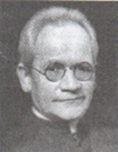
Following the untimely death of György Csaba, the parish was led first by János Madár and then by Ödön Neurihrer, until István Csernitzky once again took the helm of the community in 1914 for a long period. His 34-year tenure as parish priest marked a defining era in Hungarian Catholic life in Bridgeport. He was assisted in his work by assistant priests, including Franciscan monks and lay priests, while the community became increasingly organized. To strengthen education and religious life, Hungarian nuns taught the children, and the parish developed into a significant spiritual center.
The interwar period was particularly rich in church and community events. Numerous well-known Hungarian church figures held missions and retreats here, including Jesuit Béla Bangha, Field Bishop István Zadravecz, Tihamér Tóth and János Scheffler, as well as Bishop István Hanauer. These occasions not only brought about religious renewal but also strengthened the community’s Hungarian identity. In 1926, a new school was built, and a year later, a Boy Scout troop was formed, clearly demonstrating that the parish placed great emphasis on the education of young people. István Csernitzky’s personal example also inspired numerous vocations to the priesthood and religious life within the community.
The parish priest also actively participated in major events in Hungarian church life: he was present at the celebrations of the Year of St. Imre in Budapest, as well as at the 1938 Eucharistic World Congress, which signaled the vitality of ties between the diaspora and the motherland. In 1946, the parish and its pastor celebrated their golden jubilee, which demonstrated the community’s strength and endurance. However, the death of István Csernitzky in 1948 marked the end of an era.
His successors, Vince Bodnár and then Zoltán Seregély, still tried to maintain the community, but social and urban structural changes had already set irreversible processes in motion. The Hungarian population gradually moved away, the neighborhood became depopulated, and was then largely demolished. The church was destroyed by fire in 1971, which symbolically and practically brought to a close a chapter in the history of the Hungarian Catholic community in Bridgeport. Following this, the bishop dissolved the independent parish and annexed it to the Hungarian parish in Fairfield.
In recent decades, the Hungarian presence in Bridgeport has continued not in an institutional form, but as a historical memory. Due to the transformation of the neighborhood and the disappearance of former community spaces, the parish’s physical legacy has largely vanished; yet its history serves as a good illustration of the fate of Hungarian Catholic communities in America: a strong beginning, a flourishing institutional life, followed by gradual disintegration and assimilation in the second half of the 20th century.