Description
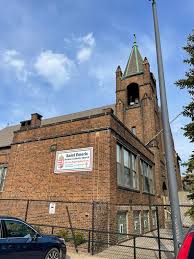
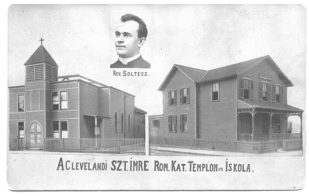
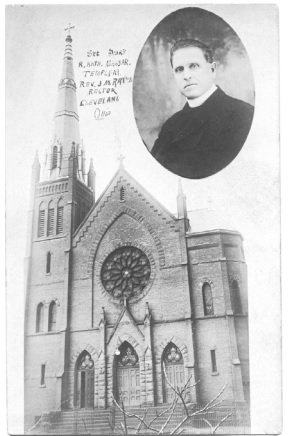
The history of St. Imre’s Roman Catholic Hungarian Church in Cleveland is closely intertwined with the formation, development, and transformation of the Hungarian Catholic diaspora in the United States; thus, it is not merely the history of a parish, but a reflection of the fate of a community spanning more than a century. The parish was established in 1904 in the western part of Cleveland in response to the practical and pastoral need for the growing Hungarian Catholic population to have its own church center operating in their native language. The earlier Hungarian churches operating in the eastern part of the city could no longer meet the needs of the geographically dispersed congregation, so it became necessary to organize a new, locally rooted community. The first church was built quickly, which clearly demonstrates the community’s determination and organization; however, this building did not last long, as it was destroyed by fire in the mid-1910s. The parishioners, however, did not give up on their parish: they continued their lives under temporary conditions, and then in the 1920s, they rebuilt the church in a new location, this time as a permanent structure, which remains the center of the community to this day.
The interwar period and the decades that followed marked the parish’s heyday. The church served not only as a liturgical space but also became one of the most important social and cultural centers for Cleveland’s Hungarian community. The parish was connected to a school, various associations, and community initiatives that served to preserve the Hungarian language, traditions, and identity in a foreign environment. During World War II, many parishioners served in the military, demonstrating the community’s integration into American society, while Hungarian identity remained a defining factor. New immigrants arriving after the 1956 Revolution gave the parish new momentum and partially offset the decline of earlier generations.
In the second half of the 20th century, however, a process began that affected most American ethnic parishes: due to assimilation, the geographical redistribution of the population, and the industrial crisis, the number of parishioners gradually declined. The community could no longer rely on the same mass base as before, and the classic “national parish” model weakened. As a result, in 2009 the Cleveland diocese decided to close several churches—including St. Imre’s—a decision that was carried out in 2010. The decision caused a severe rupture in the life of the Hungarian community, as it was not just a church but an identity-forming institution that was threatened.
The faithful, however, did not accept the closure and fought with unprecedented perseverance to save their church. They sought legal remedies and took their case all the way to the Holy See, which ultimately ruled in their favor. Following the Vatican’s decision, St. Imre Church was able to reopen its doors in 2012, marking not only a legal but also a moral victory: the community proved that it is capable of preserving its identity and institutions even under adverse circumstances.
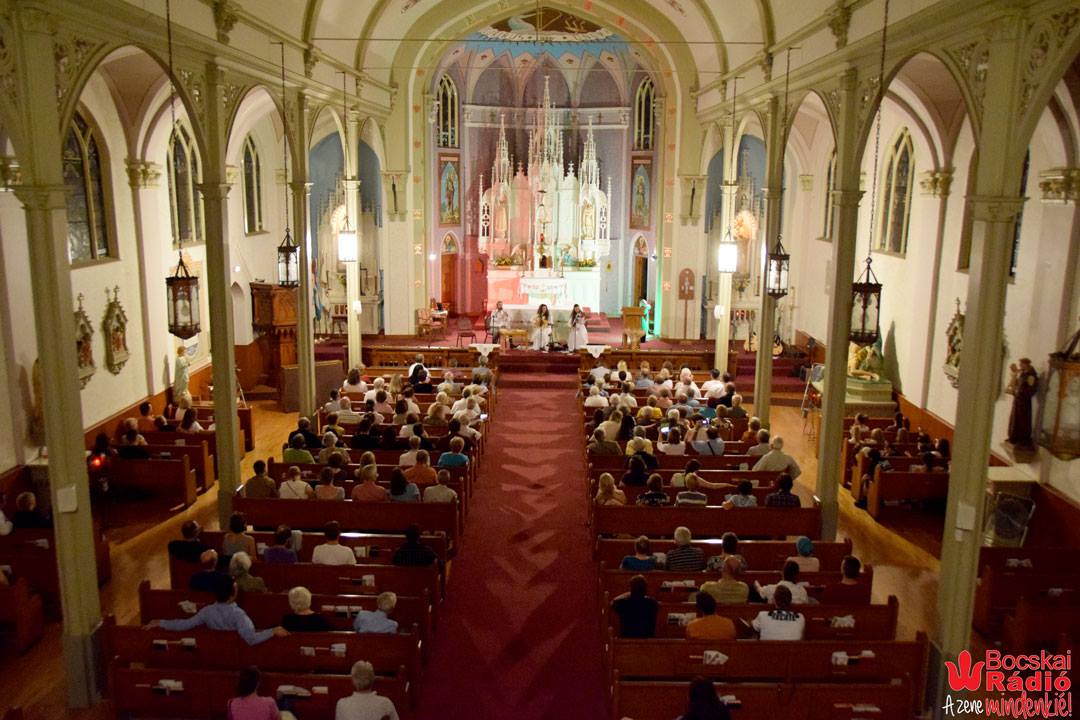
In the 21st century, the role of the church has transformed, but it has not ceased to exist. Today, it serves a smaller yet consciously organized community for whom the church is both a religious and cultural center. The Hungarian-language liturgy, community events, programs preserving traditions, and educational initiatives—such as the weekend Hungarian school or the Scouting program—all contribute to keeping the identity of Cleveland’s Hungarian community alive. Thus, the parish now functions not primarily as a mass church but as a kind of diaspora memorial center, connecting the heritage of the past with the community life of the present.
Overall, the history of St. Imre Church serves as a good illustration of the fate of the American Hungarian Catholic diaspora: the momentum of immigration, the success of establishing institutions, the flourishing of community life, and then the challenges of decline and the struggle to preserve identity. The church’s survival and current operation demonstrate that the vitality of diaspora communities depends not merely on their numbers, but also on the inner strength capable of reinterpreting and carrying forward tradition amid changed historical circumstances.