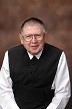
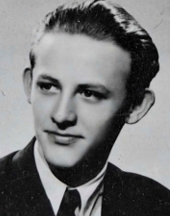
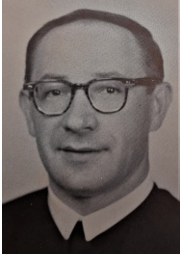
Seine Eltern waren László Balás, Bankangestellter, und Mária Borbély.
Er trat am 29. August 1948 in Zirc in den Orden ein. Sein erstes Gelübde legte er am 30. August 1949 ab. Nach der Auflösung der Orden floh er ins Ausland. Sein ewiges Gelübde legte er am 2. Januar 1954 in Casamari mit der Stabile in Zirc ab. Am 29. Juni 1954 wurde er in Stams, Österreich, zum Priester geweiht. Ab 1962 studierte er Philosophie an der Universität Sant’Anselmo in Rom und erwarb den Doktortitel. Später lehrte er zwei Jahre lang an der Universität Sant’Anselmo in Rom. Er war Mitglied und von 1982 bis 1984 Präsident der North American Patristic Society.
Sein Grab befindet sich in Irving, Texas, in der Krypta des Zisterzienserklosters.
Dienstorte im Ausland
Von
Bis
Ort
Land
Kirche / Institution
Funktion
1948
1950
Stams
Österreich
ein Studium absolvieren
1950
1957
Róma
Italien
Studium, anschließend Dozent für Philosophie an der Universität St. Anselm
1957
1958
Rein
Österreich
Novizenmeister
1958
1959
Róma
Italien
ein Studium absolvieren
1959
2014
Dallas, TX
USA
Cistercian Abbey Our Lady of Dallas
Philosophielehrer an der Universität von Dallas, Pastor, Leiter des Fachbereichs Theologie sowie Religionslehrer
Literarische Tätigkeit
Μετουσια Θεου: Man’s participation in God’s perfections according to saint Gregory of Nyssa. Róma, 1966.
Christian Transformation of Greek Philosophy Illustrated by Gregory of Nyssa’s Use of the Notion of Participation. In. Proceedings of the American Catholic Philosophical Association 40 (1966), 152–157.
Az evilági város: A radikális teológia – Isten halála után. In. Mérleg 3 (1967), 58–67.
The Encounter Between Christianity and Contemporary Philosophy in the Second Century. In. Anglican Theological Review 50 (1968), 3–15.
Participation in the Specific Nature According to Gregory of Nyssa: Aristotelian Logic or Platonic Ontology? In. Actes du quatrième congrès international de philosophie médiévale (1969), 1079–1085.
Recent Serveys of the History of the Early Church and the Tasks of the Historiography of Early Christianity. In. Church History 41 (1972), 444–451.
Theology as Interpretation of Tradition. In. Proceedings of the Catholic Theological Society of America 28 (1973), 225–233.
A tevékenység és a szemlélődés a korakeresztény hagyományban. In. Szolgálat 17 (1973), 10–18.
The Idea of Participation in the Structure of Origen’s Thought. In. Origeniana: Premier colloque international des études origeniennes. Bari, 1975. 257–275.
A hála gondolata az egyházatyáknál. In. Szolgálat 25 (1975), 56–59.
Új hermenautika a filozófiában és a teológiában. In. Mérleg 11 (1975), 165–175., 264–273.
Eternity and time in Gregory of Nyssa’s Contra Eunomium, In. Gregor von Nyssa und die Philosophie (1976), 128–155.
An Introductory Examination and Interpretation of De infantibus 16, 4-21, 5. In. Colloquii Gregoriani III Leidiensis (1976), 47–53.
The Unity of Human Nature in Basil’s and Gregory of Nyssa’s Polemics againts Eunomius. In. Studia Patristica XIV (1976), 275–281.
Plenitudo humanitatis: the unity of human nature in the theology of Gregory of Nyssa, In. Disciplina Nostra. Essays Robert F. Evans (1979), 115–131.
Marcion Revisited: A „Post-Harnack” Perspective. In. W. Eugene March (ed.): Texts and Testaments: Critical essays on the Bible and Early Church Fathers. San Antonio, 1980. 95–108.
The Meaning of the „Cross” (De Tridui Spatio p. 298.19-303.12). In. The Easter Sermons of Gregory of Nyssa: Translation and Commentary. Cambridge, 1981. 305–318.
A Thomist View on Divine Infinity. In. Proceedings of the American Catholic Philosophical Association 55 (1981), 91–98.
Gregor von Nyssa, In. Theologische Realenzyklopädie T. 14, (1985), 173–181.
Basil of Caesarea. In. The Encyclopedia of Religion, vol. II, New York, 1986. 78–80.
Response to Professor O’Meara (on the theology of K. Rahner). In. Communio XVIII/2 (1991), 252–258.
The Use and Interpretation of Paul in Irenaeus’s Five Books „Adversus Haereses“, In. The second century. A journal of early christian studies, Bd. 9 (1992), 27–39.