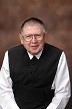
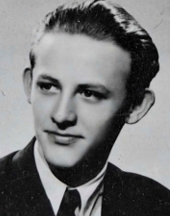
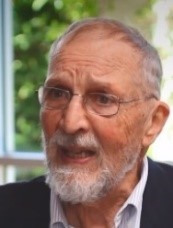
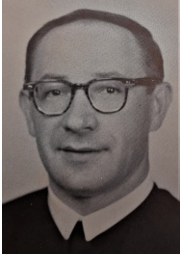
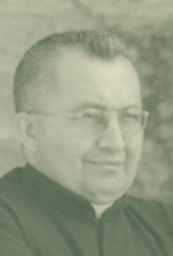
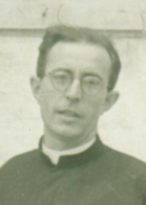
His parents were László Balás, a bank clerk, and Mária Borbély.
He entered the order in Zirc on August 29, 1948. He took his first vows on August 30, 1949. After the dissolution of the religious orders, he defected. He took his final vows on January 2, 1954, in Casamari, with a commitment to Zirc. He was ordained a priest in Stams, Austria, on June 29, 1954. From 1962, he studied philosophy at the University of St. Anselm in Rome and earned a doctorate. He later taught for two years at the University of St. Anselm in Rome. He was a member and, from 1982 to 1984, president of the North American Patristic Society.
His grave is located in the crypt of the Cistercian monastery in Irving, TX.
Foreign service locations
From
To
Place
Country
Church / institution
Position
1948
1950
Stams
Austria
pursuing studies
1950
1957
Róma
Italy
completed his studies, then became a philosophy professor at St. Anselm University
1957
1958
Rein
Austria
novice master
1958
1959
Róma
Italy
pursuing studies
1959
2014
Dallas, TX
USA
Cistercian Abbey Our Lady of Dallas
philosophy professor at the University of Dallas, pastor, chair of the theology department, and religion teacher
Literary activity
Μετουσια Θεου: Man’s participation in God’s perfections according to saint Gregory of Nyssa. Róma, 1966.
Christian Transformation of Greek Philosophy Illustrated by Gregory of Nyssa’s Use of the Notion of Participation. In. Proceedings of the American Catholic Philosophical Association 40 (1966), 152–157.
Az evilági város: A radikális teológia – Isten halála után. In. Mérleg 3 (1967), 58–67.
The Encounter Between Christianity and Contemporary Philosophy in the Second Century. In. Anglican Theological Review 50 (1968), 3–15.
Participation in the Specific Nature According to Gregory of Nyssa: Aristotelian Logic or Platonic Ontology? In. Actes du quatrième congrès international de philosophie médiévale (1969), 1079–1085.
Recent Serveys of the History of the Early Church and the Tasks of the Historiography of Early Christianity. In. Church History 41 (1972), 444–451.
Theology as Interpretation of Tradition. In. Proceedings of the Catholic Theological Society of America 28 (1973), 225–233.
A tevékenység és a szemlélődés a korakeresztény hagyományban. In. Szolgálat 17 (1973), 10–18.
The Idea of Participation in the Structure of Origen’s Thought. In. Origeniana: Premier colloque international des études origeniennes. Bari, 1975. 257–275.
A hála gondolata az egyházatyáknál. In. Szolgálat 25 (1975), 56–59.
Új hermenautika a filozófiában és a teológiában. In. Mérleg 11 (1975), 165–175., 264–273.
Eternity and time in Gregory of Nyssa’s Contra Eunomium, In. Gregor von Nyssa und die Philosophie (1976), 128–155.
An Introductory Examination and Interpretation of De infantibus 16, 4-21, 5. In. Colloquii Gregoriani III Leidiensis (1976), 47–53.
The Unity of Human Nature in Basil’s and Gregory of Nyssa’s Polemics againts Eunomius. In. Studia Patristica XIV (1976), 275–281.
Plenitudo humanitatis: the unity of human nature in the theology of Gregory of Nyssa, In. Disciplina Nostra. Essays Robert F. Evans (1979), 115–131.
Marcion Revisited: A „Post-Harnack” Perspective. In. W. Eugene March (ed.): Texts and Testaments: Critical essays on the Bible and Early Church Fathers. San Antonio, 1980. 95–108.
The Meaning of the „Cross” (De Tridui Spatio p. 298.19-303.12). In. The Easter Sermons of Gregory of Nyssa: Translation and Commentary. Cambridge, 1981. 305–318.
A Thomist View on Divine Infinity. In. Proceedings of the American Catholic Philosophical Association 55 (1981), 91–98.
Gregor von Nyssa, In. Theologische Realenzyklopädie T. 14, (1985), 173–181.
Basil of Caesarea. In. The Encyclopedia of Religion, vol. II, New York, 1986. 78–80.
Response to Professor O’Meara (on the theology of K. Rahner). In. Communio XVIII/2 (1991), 252–258.
The Use and Interpretation of Paul in Irenaeus’s Five Books „Adversus Haereses“, In. The second century. A journal of early christian studies, Bd. 9 (1992), 27–39.
Balás Dávid László O.Cist, Dr.: personal record. In: Historical directory of Hungarian, Hungarian-descended, and Hungarian-speaking clergy serving abroad. Available at: https://www.diaszporalelkipasztorok.hu/persons_v2/view.php?id=32 (accessed: 2026-04-07).