
Szent Margit R. K. Egyházközség
Directory of Diaspora Pastors
Parish (Roman Catholic)
Parish (Roman Catholic)
Description
The Catholic community of the Hungarian Settlement, known in Hungarian as Árpádhon, located near Albany, Louisiana, began to take shape in the late 1890s. According to historical records, Hungarian immigrants were drawn to the area around 1896 by advertisements from the Charles Brakenridge Lumber Company, which promised work and opportunities to purchase land. Among the first settlers were Julius Bruskay, Tivador Zboray, and Adam Mocsary, and by 1910 the community numbered 65 families, totaling 291 people. The settlers referred to their settlement as Árpádhon, meaning “Árpád’s place,” paying homage to Hungarian historical tradition.
It was within this growing community that St. Margaret’s Catholic Church was built in 1910. According to National Register documentation, the local Catholics formed a larger community than the Reformed, which is why they erected the town’s largest historic church building, consecrated in 1912. The source specifically notes that the church was named after one of Hungary’s patron saints, which clearly demonstrates that from the outset, the building was intended not only as a religious symbol but also as a symbol of the Hungarian community.
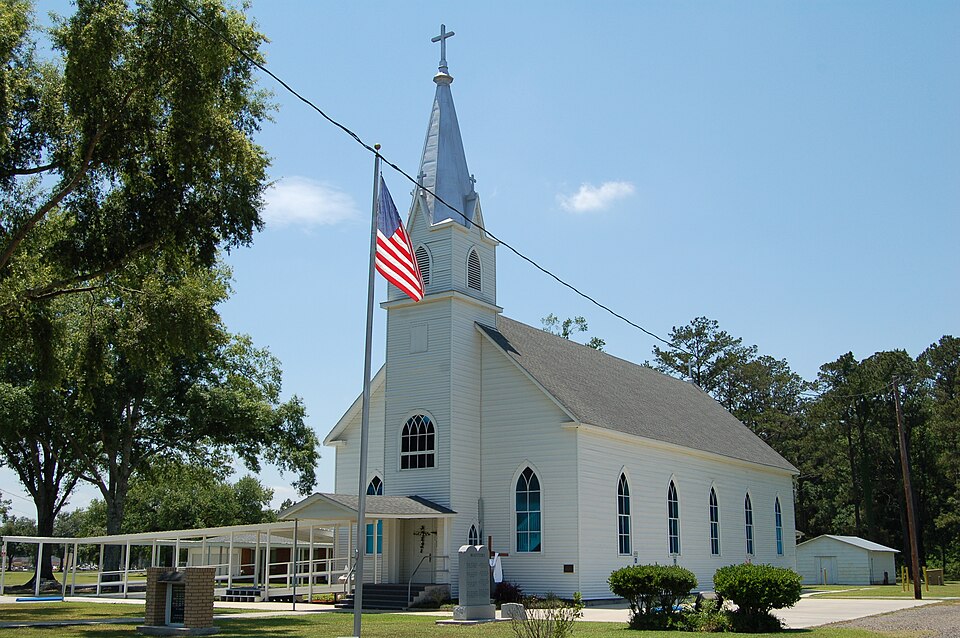
The building is a wooden-framed church in the Neo-Gothic style. It has a basilica floor plan, with a central entrance tower rising from the middle, featuring a belfry and a spire. The nave is bounded by simple, plank-clad walls, and the sanctuary ends in a semicircular apse, flanked by smaller rooms on either side. A pointed wooden vault spans the interior, and a gallery is located in the rear section. Particularly noteworthy is the Hungarian inscription above the altar: “Glory to God in the highest,” which still reflects the church’s Hungarian origins today.
Changes have been made to the church over time, but its historical character has been preserved. According to documentation, in recent decades aluminum cladding was added to the exterior walls, a small rear wing was added, and an entrance porch and an accessible ramp were constructed at the base of the tower. The originally transparent windows were later fitted with stained glass. Despite all this, the historic preservation assessment states that a person from that historical era would still recognize the building immediately today, meaning it has preserved its historical integrity.
The significance of St. Margaret’s Church is evident not only in its architecture but also in community life. According to the historic preservation description, the historical life of Árpádhon is best represented by the two surviving Hungarian churches: the Catholic St. Margaret Church and the Hungarian Presbyterian Church. These were not merely places of worship but also the social and cultural centers of the Hungarian community. The parish hall attached to the church, built in the 1920s, is also of historical significance, as it and its Reformed counterpart served as a sort of community center in the life of the town.
An earlier Hungarian-language memoir adds that the church remained one of the most important guardians of local Hungarian Catholic traditions for a long time. Although Masses were later celebrated in English, and after a time the community no longer had a Hungarian priest, numerous Hungarian elements persisted: Hungarian hymns were sung on holidays, a Hungarian prayer was recited during the elevation, and a whole range of religious and community customs were associated with the church. Thus, St. Margaret’s Church was not only the religious center of Albany’s Hungarian Catholics but also one of the most important sites in the community’s collective memory. The broader historical context of the preservation of Hungarian traditions is also indicated by the fact that the National Register explicitly links the church’s significance to the local Hungarian ethnic heritage, and places the period of significance between 1910 and 1941.
The church’s historical value was officially recognized when it was listed on the National Register of Historic Places on January 28, 1992. According to the designation, it is a building of local significance in the field of ethnic heritage and one of the most important surviving monuments to the history of the Hungarian Settlement. Therefore, St. Margaret’s Church is today not only an old Louisiana Catholic church but also a prominent historical site of the Hungarian past in America.
Related persons
Assisting priests / without specific function

Hegyi Antal
1903 - 1906 | kisegítő lelkész
Other ministers

Grosz Ferenc
1906 | árvaház vezető
Rácz József
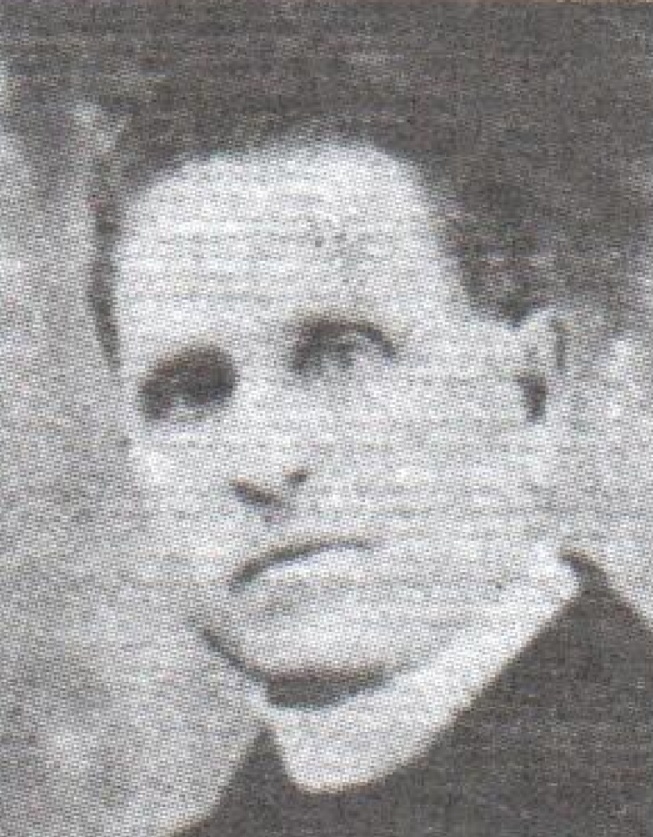
1922 | magyar telepesmisszió
Sources
- Török — Török István: Katolikus Magyarok Észak-Amerikában, Youngstown, Katolikus Magyarok Vasárnapja, 1978.
- https://npgallery.nps.gov/NRHP/GetAsset/NRHP/91002025_text
- Mocsary, Victoria Ann. Arpadhon; The Largest Rural Hungarian Settlement in the United States. Hammond, Louisiana: Center for Regional Studies, Southeastern Louisiana University, Folklife in the Florida Parishes Series, Vol. IV, 1990.
- https://diobr.org/st-margaret-queen-of-scotland-albany