
Szent István R. K. Magyar Egyházközség
Directory of Diaspora Pastors
Parish (Roman Catholic)
Parish (Roman Catholic)
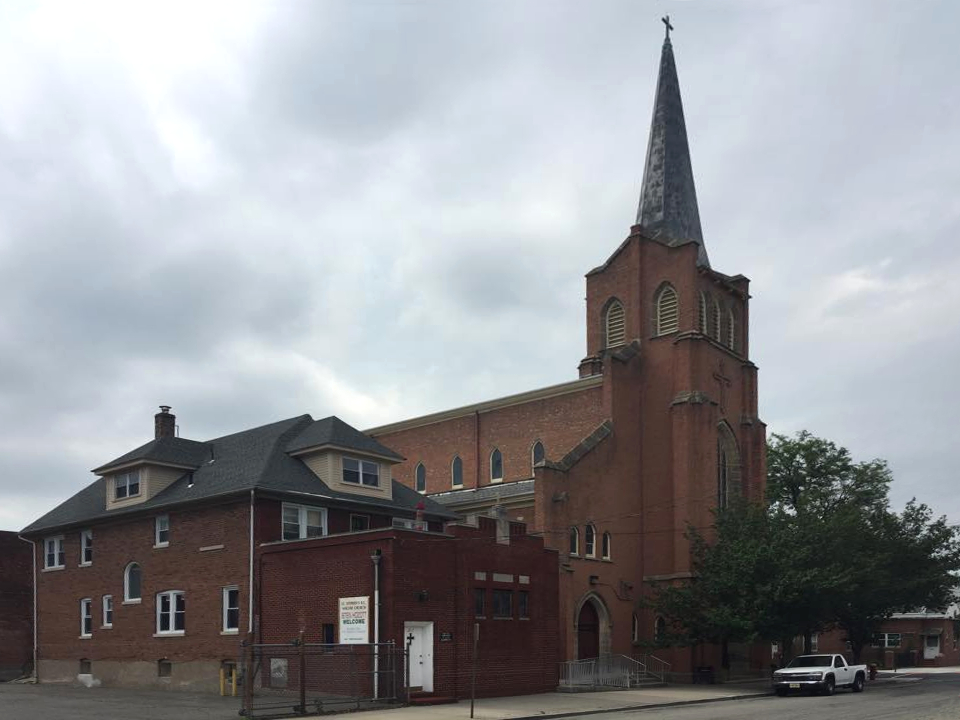
Description
The St. Stephen Roman Catholic Hungarian Church in Passaic is the only independent Hungarian-speaking Roman Catholic parish on the East Coast of the United States that has survived to this day. It was founded by John Joseph O’Connor, then Bishop of Newark, with a charter dated December 24, 1902. The parish’s languages are Hungarian and English, and Mass is celebrated in both languages every Sunday in the church.
The Decade of Construction
In 1883, Slovak and Hungarian Catholics jointly built the Church of the Assumption of Mary, but conflicts soon arose between the two ethnic groups, so the Hungarian parishioners appealed to the local bishop, requesting a priest. This came to pass in December 1902, when Bishop John Joseph O’Connor of Newark appointed Rev. Géza Messerschmiedt as the first pastor of the Roman Catholic Hungarian parish of St. Stephen in Passaic.
The first wedding took place on January 18, 1903; the couple was Károly Molnár (Söréd, Fehér County) and Mária Krivda (Szina, Abaúj County). The first person to pass away was Teréz Schuster, who died at the age of 50 on December 21 and was laid to rest on Christmas Eve.
Rev. Géza Messerschmiedt writes of the difficulties of the early period as follows: “Our Catholic brothers and sisters would surely be interested if I were to describe what we have done so far. I arrived here just before Christmas, so that only one day separated my appointment as bishop from the holy feast of Christmas. I found a people full of enthusiasm, inspired by the holy and noble cause, whose sole desire now was to celebrate the holy Christmas feasts in a manner worthy of God. But where? The churches were all occupied, some of them having been rented out in advance by foreign nationalities. Of the items necessary for divine worship, there was nothing, absolutely nothing. And we had only this one day left. And yet, by midnight on Christmas Eve, everything was ready. We settled into a decent, large hall, and while the world spent the holy evening in family circles, by a warm stove, around the sparkling Christmas tree, we worked feverishly, building the altar, arranging and organizing the church objects we had truly “acquired with great effort.” The next day, on Christmas Day, I celebrated my first Mass in a room packed to capacity. As I sang the Gloria, tears welled up in my eyes, for I thought of the little Jesus, whom human heartlessness had driven out of his proper dwelling along with his family, into a cold, ragged stable. They, too, had been given no room!
Later, we acquired the remaining necessary items, so that we were now fully equipped. But this, too, has its own story. We held a congregational meeting. I explained what we still needed, and that we should not burden the congregation with the purchase of these items, but rather that enthusiastic believers should step forward and take upon themselves the purchase of this or that item. I did not yet know my people, nor the extent of their enthusiasm, and so I made this appeal almost fearfully. And lo and behold, every item read out found a buyer. In fact, they competed in their offerings. So by the end of the meeting, we were $250 richer.
Construction of the church began in the spring of 1903, and the cornerstone was solemnly consecrated on July 21, 1903. The church was consecrated on August 21, 1904, by John Joseph O’Connor, Bishop of Newark.
The parish priest at the time wrote of this event: “August 21, 1904. This was our day. Do you not agree, my dear parishioners, that the words of Scripture truly apply here: ‘This is the day the Lord has made; let us rejoice and be glad in it.’ For indeed, you all wept with me out of joy. Yes, as I looked out over the crowd that filled the square around the Third Street Church that morning, I did not hear a single word. There was silence everywhere; I saw only that every eye was shining with joy, with tears of happiness.
At half past nine in the morning, the procession set out from the church, with some four thousand members of religious communities and associations from various nationalities, toward the center of town, where we awaited the bishop arriving from South Orange. We proceeded through streets crowded on both sides with an almost impenetrable crowd. The rhythmic sounds of five bands led this great multitude, which included members with unfurled decorative flags, uniformed members (hussars, Polish soldiers, Greek Catholic associations, etc.), rows of women’s associations adorned with badges, and especially the paired procession of girls dressed in white, the multitude of carriages presented a truly picturesque sight.
At the designated spot, the bishop was greeted by the parish priests of Passaici: Géza Messerschmidt, Miklós Molcsányi, and Valentin Chlebovszky. The ringing of the bells of the Catholic churches (Irish, Polish, Slovak, Greek Catholic, Roman Catholic, Hungarian, German, Italian) accompanied the bishop, who, looking over the procession that seemed to stretch on endlessly, at the seemingly endless line of girls dressed in white, remarked with a smile: “haec est revera ecclesia fillialis” (“well, this is truly a daughter church!”).
After a few minutes’ rest at the parish house, the bishop entered the church led by our priests, where the consecration began immediately. Upon the conclusion of this ceremony, the bishop took his seat on the ornate throne prepared in the sanctuary, whereupon the solemn Mass began, celebrated by Most Rev. Ferenc Dénes, pastor of St. Elizabeth Church in New York. The festive homily was delivered by the Most Reverend Dr. Imre Sebők, a religion teacher at the Budapest Real School who happened to be in America at that time. His sermon had a profound effect on the souls present. During the Mass, the congregation’s choir, named after the Blessed Virgin Mary, sang the Latin Mass composed for this occasion by parish priest Géza Messerschmidt. In addition, the bishop and the visiting clergy were deeply moved by our Hungarian church hymns, which the congregation sang fervently with one heart and soul.
The church celebration was followed by a splendid banquet at the parish, after which the bishop returned home. Haec dies, quam fecit Dominus...! This was the day that God gave us to rejoice and be glad! -- Blessed be His holy name!
Although the construction of the church was completed in 1904, the difficulties did not cease. After the church was built, a debt of 76,000 dollars remained (converted to 2015 dollars, this would be roughly 2 million dollars). The ongoing financial problems, as well as the attitude and complaints of certain members of the congregation, took a toll on the health of Géza Messerschmiedt, who had built the church, so he left Passaic in 1911.
Stagnation, then a Resurgence
After Father Messerschmiedt, two pastors briefly led the parish: Rev. János Schimkó and Rev. Lajos Kovács. The financial problems were beyond their capabilities, so they left the parish after a short time. In 1915, Reverend József Marczinkó arrived and remained at the helm of St. Stephen’s for seventeen years. Father Marczinkó guided the church through the hardships of World War I and the early years of the Great Depression. The Depression hit not only the city but also the parish community hard. It was difficult to recover from the financial decline and to implement the next step in the parish’s development: the parish school. This could not be realized during his time, but he succeeded in establishing financial stability and getting the parish, which had fallen into debt, back on its feet.
After Father Marczinkó’s departure, James Raile (Jakab Raile) served as parish priest for one year in 1932. During his brief stay, he recognized the importance of having a suitable place where parishioners could also engage in social life. Until then, a catacomb-like space beneath the church had been used for such purposes. During the day, religious instruction took place there; in the evenings, various club meetings were held; and on Sundays and holidays, events for adults and the elderly were organized. Father Raile received permission from the Bishop of Newark to build a separate, large, and modern facility. They purchased the dilapidated iron foundry on Market Street behind the church to build the new wooden auditorium in its place. However, the work came to a halt because the Jesuit fathers—including Fr. Raile—were recalled to their home country.
“The Last Patriarch”
Father János Gáspár took over the leadership of the parish in 1933. During his tenure, the Hungarian school building was constructed, followed by the renovation of the church in 1945, and in 1950, the parish building still in use today was completed. Otto von Habsburg visited the parish in 1940.
The parish celebrated its 50th anniversary in 1952. However, in May 1952, a fire broke out in the church floor beneath the pews on the left side. Firefighters filled the basement to the brim with water, but to no avail; the water did not reach the fire, so they had to tear up the floor beneath the pews. For months, Mass was held in the school’s auditorium while the church was being restored.
After the 1956 Hungarian Revolution and War of Independence, the parish, led by Father Gáspár, took in more than 120 refugee families. The revolution also shook Hungarian Americans, and they welcomed the refugees with unprecedented generosity. There was no shortage of financial aid, encouragement, or kind words. Working together with the Hungarian Reformed Church, they provided temporary housing for many Hungarian families in a house on Gregory Avenue that had been furnished for this purpose. In 1957, the congregation sent $27,000, followed by another $10,000, as well as approximately 6,500 kg of clothing to parishes along the Austrian border to provide support for fleeing Hungarians.
In 1958, despite many difficulties, a new bell was consecrated at St. Stephen’s, the so-called “Freedom Bell.” This fulfilled the dream of the founding pastor, Rev. Géza Messerschmiedt, to have a third bell for the church.
Father Gáspár was a man who appeared strict on the surface but had a tender heart. This is illustrated by the following incident, which occurred around the time air conditioning became fashionable. The convent must have been stiflingly hot during the summer months. Sister Aurélia, seeking relief for the nuns, approached Father Gáspár, saying: “Father, it’s terribly hot in the convent; couldn’t we get an air conditioner?” Father Gáspár, that tall, burly man, turned on his heel so abruptly that he nearly knocked Sister Aurélia over, and uttered only two words: “No money!”
The next morning, however, the technicians were there to install the air conditioner. Father Gáspár, who was said to be “the last great patriarch,” proved once again that the comfort of those entrusted to his care was so important to him that he would find the necessary funds from somewhere.
This gentle, saintly priest won the hearts of his people by caring for everyone personally; for thirty years, he carried the fate of every single parishioner in his heart. His death—on February 21, 1963—plunged the entire parish into deep mourning.
The Second Half of the 20th Century—Decades of Trials
Rev. Antal Dunay
In the spring of 1963, Rev. Antal Dunay took over the work of Father János Gáspár and the leadership of his beloved parish. When the city authorities decided to demolish part of the school building, so that classes would not have to be interrupted during the renovation, Father Dunay arranged for the children to be temporarily relocated to the Hungarian Reformed Church. Rev. Aladár Komjáthy, a Reformed minister, gladly made the Calvin Hall available to the students. Meanwhile, Father Dunay appointed a committee to make recommendations for the necessary renovations at the school. Based on these recommendations, construction began on a spacious new wing. The fundraising campaign for the school’s construction fund was so successful that it fully covered the $398,000 spent on the construction and renovation of the old building. At Father Dunay’s initiative, laypeople came to play an important role in the life of the parish. He recruited many new readers and trained more than 20 altar servers.
Cardinal Mindszenty’s Visit
Cardinal József Mindszenty, Prince Primate, made a pastoral visit to the United States in 1974. During this trip, he visited St. Stephen’s Hungarian Church in Passaic on May 19, 1974. The parish priest at the time, Antal Dunay, had left Hungary after 1945 specifically on the instructions of József Mindszenty. The sequence of events during the visit included a solemn High Mass celebrated by the Primate, followed by a visit to the congregation of the Hungarian Reformed Church on the neighboring street and a welcoming address in their church. In the afternoon, he visited and blessed the grave of Rev. János Gáspár (who had been his chaplain in Zalaegerszeg), after which he visited our scouts at their scout house in Garfield
Under the new circumstances:
During the final stages of Father Antal Dunay’s illness, Rev. John J. Cuscack, C.M., served as his assistant; following his death in the second half of 1977, Rev. John J. Cuscack, C.M., took over the parish as administrator. He had previously served as our parish’s chaplain for six years. He organized the Hungarian-language services. (Hungarian Masses were primarily celebrated by Szerén Szabó, OFM.) In 1978, Rev. Béla Török arrived at the church; he served as pastor of St. Stephen’s Church from 1978 to 1990. It was during his tenure that the demographic profile of the community surrounding the parish changed, resulting in many parishioners leaving the parish. In 1981, the American Hungarian Museum opened in the former convent building.It was during his tenure that the church’s exterior was renovated and the interior was painted, using funds from the reserve budget. At the same time, the church faced another ordeal: in June 1987, the auditorium burned down and became unusable due to fire and water damage; the renovation dragged on until 1990.
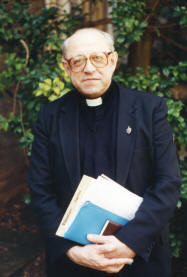
On September 28, 1989, the parish welcomed the incumbent Hungarian prelate for the first time: Cardinal László Paskai, Primate and Archbishop of Esztergom-Budapest. After Rev. Béla Török retired, István Mustos, a Piarist priest, became the parish priest from October 7, 1990, to June 2007; he was installed as parish priest by Bishop Rodimer of Paterson and Bishop Attila Miklósházy, Bishop of Hungarians Abroad. During his tenure, the long-overdue renovation of the church began, though it was completed by his successor.
Today
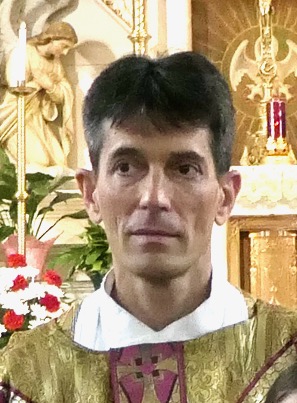
Following Rev. István Mustos, Rev. László Vas of the Diocese of Oradea took over the leadership of the parish on December 2, 2007. As a member of a different diocese, he does not receive a parish appointment, but the Bishop of Paterson appoints him to the status of administrator with full parish authority. In 2008, the diocese closes the Catholic Regional School, after which the building stands vacant for nearly three years. In 2009, the tradition of parish dances, which had ceased due to the 1987 fire, was revived. In 2011, the new dining hall beneath the Mindszenty Hall was completed. The new wing of the school was successfully leased out, and on May 15, Bishop Ferenc Cserháti administered the sacrament of confirmation in Hungarian and opened the series of celebrations for the jubilee year. In the spring of 2013, the kitchen for the parish dining hall was completed. In 2014, the parish celebrates the 110th anniversary of the church’s founding. As part of this, in May, László Böcskei, Bishop of Oradea, makes a pastoral visit to the church, and on September 20, Arthur Serratelli, Bishop of Paterson, closes the Jubilee Year. On September 27, János Áder, President of the Republic of Hungary, was a guest of the congregation. Following the death of László Vas, László Balogh of the Diocese of Vác took over the duties of pastor, which he handed over to the current pastor, Imre Juhász, after six years.
Church School, Hungarian-Language Education
In Passaic, the Hungarian Reformed Congregation had already been organizing a Summer School before World War I. In 1920, for example, under the pastoral leadership of Rev. László Tegze, 120 Catholic and Reformed children participated in this eight-week Hungarian summer school. The summer schools held each summer served multiple purposes: While the children were taught Hungarian, they also helped working parents by providing daytime care for their children. In 1937, this form of Hungarian education was discontinued due to dwindling enrollment. However, the children of Passaic continued to be cared for by enthusiastic Hungarians, who in the meantime launched a Saturday Hungarian school, as the summer school had proven insufficient for nurturing and preserving the Hungarian language. The children of immigrants were forgetting their mother tongue at an alarming rate. Recognizing this gave rise to the idea that something had to be done with the youth to save the mother tongue from falling into oblivion.
The Hungarian language course first began in 1933 at the St. Stephen Roman Catholic Hungarian Parish. Hungarian nuns taught on Saturdays from 9 a.m. to 3 p.m. They had arrived at the parish in 1914 at the invitation of Rev. Lajos Kovács and remained in Passaic until 1973. The sisters were members of the Congregation of the Daughters of Divine Love and came largely from Hungary. It was during this time that plans for the construction of the school were also realized. The children of parishioners began their regular schooling here. The parish school was consecrated in 1937 and expanded in 1967.
After World War II, the school operated under the name Catechism School, and instruction was conducted in two languages.
During the emigration waves of 1949–1951, large numbers of World War II refugees, the so-called D.P. (Displaced Person) Hungarians, also arrived in Passaic. Hungarian education once again became necessary. In 1953, alongside the Scout movement and organized by the Scouts, Hungarian education resumed on Saturdays at the St. Stephen Parish. Most of the teachers were Scout leaders. In the fall of 1953—organized by the Scout Association—the so-called Free University began for 14–17-year-olds as a substitute for high school. At the end of the two-year course, in 1955, the first “Hungarian High School Graduation Exam” in Hungarian history, literature, and geography was held here in Passaic.
In 1958, Rev. János Gáspár, the parish priest, opened the St. Stephen Parish Weekend Hungarian School. The Saturday morning classes, which ran throughout the year, operated with the assistance of the Hungarian branch of the Society of the Holy Name. The school, which started with 24 children, was first taught by Dr. Sándorné Nagy, followed by Dr. Lajosné Mikófalvy.
In 1961, Károly Andreánszky took over the school’s administration and introduced a four-year, four-grade system. The number of students ranged from 35 to 50.
In 1965, during the tenure of Rev. Antal Dunay, a major and unique change took place. In Passaic—the first of its kind in all of America—a full-time Hungarian school was established, named the Mindszenty Hungarian School. With significant sacrifices from the parish, parents, and enthusiastic Hungarians, daily instruction began for more than 100 children. Following the regular English-language classes, a daily one-hour session covered the curriculum according to a set schedule: writing, reading, grammar, geography, literature, history, and music.
The Mindszenty Hungarian School suffered a major blow in 1974 when the Szent István School lost its independence and, through the merger of five Catholic schools of different nationalities, became the diocesan district school. The number of Hungarian students declined because parents withdrew their children, since this was no longer “the Hungarians’ school” but the diocese’s. By the spring of 1976, the Mindszenty Hungarian School had only 11 students. Therefore, Rev. Antal Dunay, the parish priest, decided to join forces with the weekend school that had been reestablished by the Reformed Church in 1975.
In the fall of 1976, the St. Stephen Parish, in collaboration with the Hungarian Reformed Parish, reorganized the weekend Hungarian school—which has been operating continuously ever since—under the name “Passaici Sister Churches Hungarian School,” with an average of 50 students. At the end of 1983, the school moved into the classrooms of the St. Stephen Parish school. Since the Catholic Church became the sole sponsor from that point on, it took the name St. Stephen’s Hungarian School. During this time, Emese Kerkayné Maczky served as the school’s vice principal from 1979, and then as principal from 1990 to 2006. She took over the school with 96 students; the enthusiasm lasted for a while, but unfortunately it gradually waned. In 2011, Zoltán Németh took over the school’s leadership. Due to the declining number of students, the school suspended its operations in 2014.
Additional information
A blend of Gothic and Romanesque styles, the nave is 100 feet long and 65 feet wide. The nave is 60 feet high, and the aisles are 27 feet high. The nave rests on 14 iron columns. On every other column base, where the arches do not meet, stands a bust—statues of Latin and Greek Doctors of the Church. The column capitals—the church’s main ornament—were made of cement according to the Italian master builder’s original design. A three-winged angel looks down from each capital. Each one is different. According to the initial design, the iron columns were only surrounded by wooden cladding, and the capitals were quite simple.
The centerpiece of the sanctuary is the beautiful Gothic high altar, designed by Ft. Messerschmidt and carved by Anton Schimmel, a woodcarver of Tyrolean origin. It is 40 feet high and 18 feet wide. It is a source of pride for our congregation. Above the tabernacle, we see a massive statue of St. Stephen offering the Holy Crown to the Great Lady of the Hungarians. To his right and left are the saints of the House of Árpád: Prince St. Imre, King St. László, and, in smaller figures, St. Elizabeth and St. Margaret the Virgin. The main altar was a gift from the St. Anne Society, costing $1,359.00. It was consecrated on July 26, 1904, St. Anne’s Day, by Rev. Imre Haintinger, the local parish priest.
The church has three naves. Together with the choir, it can accommodate 500 people. On the right and left sides of the sanctuary, there is a door leading to each sacristy. The pulpit stands in the sanctuary, and a staircase leads up to it from the left sacristy. The section facing the choir consists of three vestibules corresponding to the three naves; staircases lead up to the choir from the right and left sides. Next to the vestibules, there was a confessional on each side; today, the Altar of the Heroes and the Mission Cross stand there.
The church also needed pews, but they were not acquired until 1906. Until then, rented pews were used.
The side altars are also works of art. The one on the right is dedicated to the Sacred Heart of Jesus, and the one on the left to the Virgin Mary. It was not until seven years later, in July 1910, that they were installed. The cost was $1,100.00. The priest still uses the Sacred Heart side altar on Good Friday as the “Holy Sepulcher,” with Hungarian Boy Scouts standing guard before the Holy Sepulcher. The Sacred Heart of Jesus statue was restored in the early 1990s. The Virgin Mary altar is still solemnly decorated today, and the statue of the Blessed Virgin is crowned every May.
The tower is 132 feet tall. Three bells proclaim God’s glory daily. The fourth bell is a funeral bell used at burials. In 1958, Father Messerschmidt’s dream of having three bells ringing from our church tower was finally realized. It was then that the so-called Liberty Bell was dedicated. In 2001, the bells were repaired, thanks to the generosity of several enthusiastic parishioners. Now the noon bell can be heard throughout Passaic, commemorating the 1456 victory at Nándorfehérvár.
Our windows are special treasures of our church. The original windows, like the entire interior of the church, were designed by Father Messerschmidt. Those windows were clear and transparent, allowing as much light as possible into the church. The 14 stained-glass windows surrounding the church depict various scenes from the Holy Scriptures and the lives of the saints. These windows are approximately 16 feet tall. The windows above the altar and above the organ also help bring light into our church. The church received these stained-glass windows during Father Gáspár’s time.
Two pulpits served our parish priests over the course of 100 years. The original pulpit was a tall, artistically carved Gothic piece. During the time of Father János Gáspár, it was modified to be lower. The second, current pulpit was completed in the 1950s. It was funded by parishioners using proceeds from the very popular church plays written at the time by László Kertész.
The walls featured the 14 Stations of the Cross made of plaster. These old reliefs were replaced in the 1940s with bronze ones and then restored in the late 1990s.
The church was originally lit and heated by gas and electricity. Gas lamps and candles hung from the tall columns. These were removed when the church received new heating and lighting systems in the 1950s.
There are many statues in the church. In addition to the Hungarian saints of the Árpád dynasty on the main altar and the busts atop the columns, many of the world’s beloved saints are commemorated in the church. Saint Thérèse of Lisieux stands next to the Altar of the Heroes with her rosary and roses. A statue of Michelangelo’s Pietà is located beneath the Mission Cross. The other statues enhance the church’s spiritual and aesthetic value.
The organ was built by the Vermont Peragallo Company. The church has used an electric organ since 1953. The organ has nine stops and can reproduce a variety of musical tones. The organ was restored in the 1990s and has since been played on multiple occasions by local artists during concerts. Our organists enhance the solemnity of the Mass with organ music on Sundays, holidays, weddings, and funerals.
The rooms beneath the church have served various purposes over the centuries. In the 1920s and 1930s, the church cantor, András Molnár Sr., held religious instruction and Hungarian language classes for the children there. For decades, the space was used for storage and Scout meetings. In 1997, a major cleanup of the church was organized. This gave the church two huge new rooms. Since then, they have been used as meeting halls and, on occasion, as venues for musical and literary performances.
Note: 1 foot = 30.48 cm
St. Stephen’s Church houses significant works of art that went unrecognized for a long time. Eight busts by Gaetano Federici, a prominent 20th-century American sculptor, adorn the church’s nave, with four sculptures on each of the column capitals on the two opposing walls. The works depict the eight Doctors of the Church from the Eastern and Western Churches.
Federici was born in 1880 in Castelgrande, Italy, and moved to America at the age of seven, where his father ran a successful construction business. He also built our church. His son, however, possessing unparalleled artistic talent, carried out the interior decoration of the church. His style was traditional and classical, standing in contrast to the avant-garde trends prevalent at the time.
One of his teachers was Giuseppe Moretti of Manhattan, who designed a colossal statue depicting a volcano for the St. Louis World’s Fair, commissioned by the city of Birmingham, Alabama. Since his studio was not large enough, he created a life-size model of the 17-meter-tall statue in our church, which was under construction at the time. The enormous size of the work is indicated by the final, cast statue’s weight of 54 tons. Interestingly, Moretti already had connections to Hungary: he had created a marble portrait of Franz Joseph, worked in Budapest, and found excellent marble in Transylvania, but the military authorities did not permit its extraction (fearing a Russian invasion, they had not built the necessary railway line). Of the two English-language articles below, the first introduces Federici, while the second describes the history of the Volcano statue.
Related persons
Parish priests
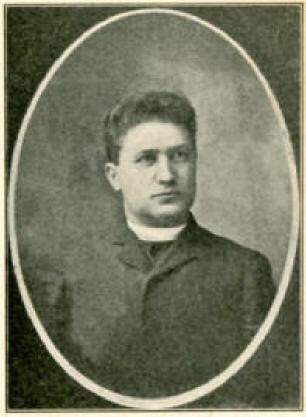
Messerschmiedt Géza
1902 - 1911 | alapító, templomépítő plébános
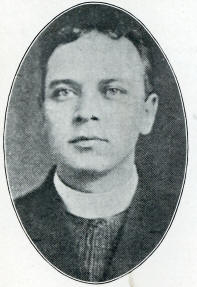
Schimkó János, Rev.
1911 - 1913 | plébános
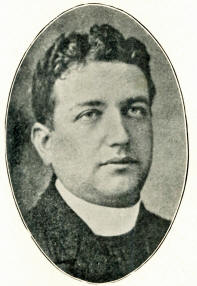
Kovács Lajos
1913 - 1915 | plébános
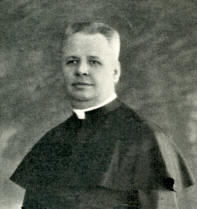
Marczinkó József
1915 - 1932 | plébános
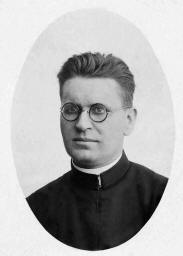
Raile Jakab SJ
1932 - 1933 | plébános
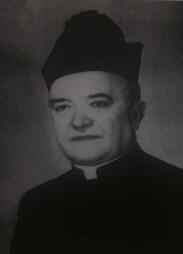
Gáspár János
1933 - 1963 | plébános
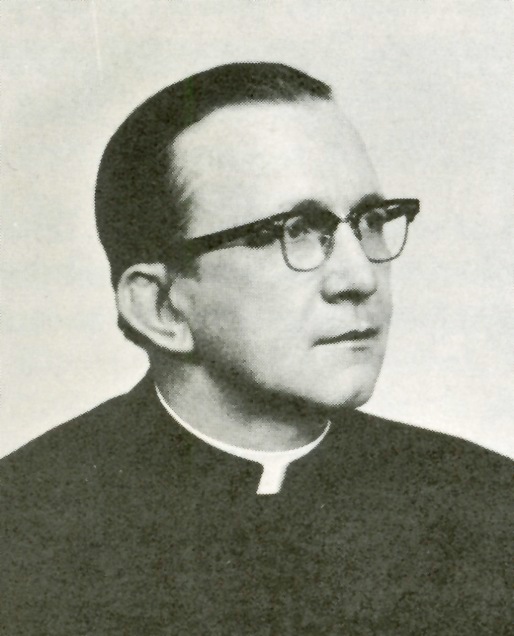
Dunay Antal, Dr.
1963 - 1977 | plébános
Mustos István Sch.P.
1990 - 2007 | plébános

Balogh László
2018 - 2024 | plébános, közben misézik New York, NY-ban
Juhász Imre
2024 | plébános, közben ellátja New Brunswick, NJ, USA-t és New York, NY, USA-t is.
Assistant priests
Molnár András
1942 - 1954 | segédlelkész
Sources
- Dudás — Vas László, Kerkayné Maczky Emese, Dudás Róbert Gyula: A passaici Szent István római katolikus magyar templom története, Domaszék, 2015.
- https://www.ststephenspassaic.com/history/tortenet.htm