
Magyarok Nagyasszonya R. K. Egyházközség
Directory of Diaspora Pastors
Parish (Roman Catholic)
Parish (Roman Catholic)
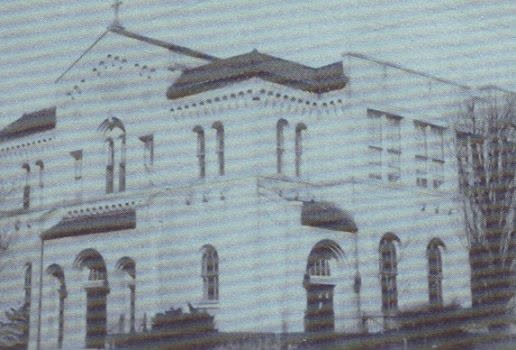
Description
The Our Lady of Hungary Roman Catholic Parish was Chicago’s first major Hungarian-American Roman Catholic parish. The parish was founded in 1904 in the southern part of the city, in the Burnside neighborhood, where large numbers of Hungarian immigrants settled in the early 20th century. The church was located near 93rd Street and Kimbark Avenue; later sources also list the address as 9237 South Avalon Avenue.
The establishment of the parish was closely linked to the first major wave of Hungarian emigration. At the turn of the 19th and 20th centuries, Chicago’s southern industrial district—primarily the iron and steel industries, as well as the factories in the area—attracted a significant number of Hungarian workers. It soon became clear to the immigrants that they needed pastoral care in their native language and their own church community. As a result, the Parish of Our Lady of the Hungarians was established in 1904, serving not only as a religious center but also as one of the defining institutions of local Hungarian social and cultural life.
In addition to the church, a school and various church organizations also operated there. The parish hosted Hungarian-language Masses, religious education, associations, and community events, making it one of the most important centers of Hungarian Catholic life in Chicago for a long time. Local history works chronicling the history of the Burnside neighborhood also highlight the Church of Our Lady of Hungary as one of the area’s defining religious institutions.
By the 1920s, and especially the 1930s, a significant portion of Chicago’s Hungarian community had moved to other neighborhoods in the city. As a result, new pastoral centers were needed. In 1934, members of the Our Lady of the Hungarians parish community established the St. Stephen the King Hungarian Roman Catholic Parish in the northern part of the city, which for a long time played a leading role in Hungarian Catholic pastoral care in Chicago.
Following World War II, even more Hungarian refugees and emigrants arrived at the parish; but the gradual assimilation of the Hungarian-American community, population out-migration, and the social transformation of the Burnside neighborhood increasingly reduced the number of parishioners. The parish’s activities gradually declined, and in 1987, the Archdiocese of Chicago dissolved the parish. The church building was subsequently demolished; residential properties now stand in its place.
Related persons
Parish priests

Soltész István
1915 - 1929 | plébános

Horváth Ernő, Msgr.
1923 - 1970 | plébános, 1937-ben a Szent István templomban szolgált
Klug Elemér
1972 - 1973 | plébános
Assisting priests / without specific function
Horváth Ernő, Msgr.
1970 - 1980 | nyugállományban, kisegítő lelkész
Sources
- MKL — Magyar Katolikus Lexikon I–XV., főszerk. Diós István, szerk. Viczián János, Budapest, Szent István Társulat, 1993–2010.