Description
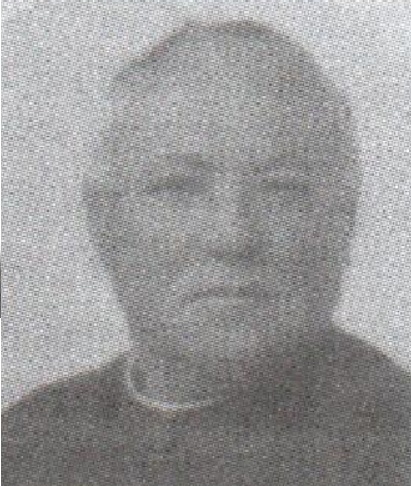
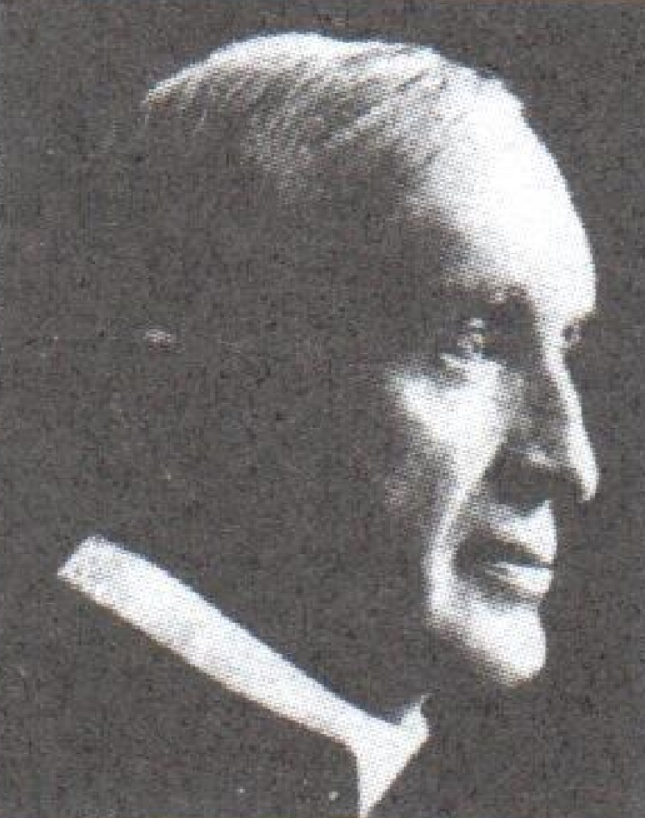
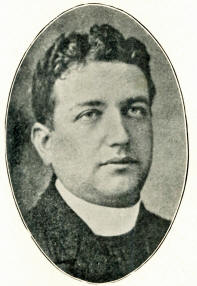
The history of the Hungarian Catholic community in South Bend is one of the most significant chapters in the history of the Hungarian Catholic Church in the United States at the turn of the century. Although the city’s Hungarian Catholics had wanted to establish an independent parish as early as the 1890s, the formation of an organized community is in fact linked to the person of Mihály Bíró, known in the United States as Michael J. Biro, C.S.C. Bíró was born on October 5, 1863, in Szikszó. He completed his high school studies with the Cistercians in Eger, then emigrated to the United States in 1893. On August 15, 1897, he entered the Congregation of the Holy Cross; two years later, he took his religious vows and completed his theological studies at the Catholic University of America in Washington, D.C. He was ordained a priest on February 8, 1900, by Thomas O’Gorman, Bishop of Sioux Falls.
Following his ordination, the Congregation of the Holy Cross and the Diocese of Fort Wayne entrusted him with the task of organizing South Bend’s first Hungarian Catholic parish. Contemporary diocesan historical accounts clearly state that he became the first pastor and founder of the Hungarian parish named after St. Stephen. His work went far beyond that of a simple parish priest: he organized the city’s Hungarian Catholics—who had previously lived in scattered communities—into a unified community, laying the foundations for a system of institutions that served the Hungarian community in South Bend for more than a century.
The first major task was to establish a church of their own. On July 3, 1900, Mihály Bíró purchased the Milburn Memorial Chapel, a Methodist chapel, which was quickly converted into a Catholic church. The interior of the building was completely redesigned: three altars were erected in honor of the Blessed Virgin Mary, St. Joseph, and St. Anthony of Padua; a choir loft was built; and the Stations of the Cross were installed, thus transforming the former Protestant chapel into a worthy Catholic church in a short time. From that point on, St. Stephen’s Church was not merely a place of worship but also the center of the religious, social, and cultural life of the Hungarian community in South Bend.
Mihály Bíró, however, was not content with merely establishing the church. That very same year, he also had the parish school built, a four-classroom building with a floor area of 45 by 45 feet. Each classroom could accommodate fifty children, and the construction cost approximately $3,000. Education was provided by three lay teachers—one man and two women—and a total of 171 children were enrolled in six classes. The establishment of the school demonstrated that, already in its first year, the Hungarian parish had become a fully-fledged community institution, where, in addition to religious instruction, great emphasis was placed on passing on the Hungarian language and culture.
The community grew at an extraordinary rate. At the beginning of Bíró’s tenure, about sixty Hungarian families belonged to the parish; however, after just a few years, the St. Stephen Parish consisted of 321 families, totaling 2,166 parishioners. At the same time, the old church could accommodate only 350 people, so it soon became clear that a new, larger church would need to be built. Meanwhile, parish life grew increasingly vibrant: the Knights of St. Stephen Society was founded, the Rosary Society, the Children of Mary group, as well as numerous charitable and relief organizations, including the St. Joseph, St. Peter, Holy Trinity, St. Anthony, Blessed Virgin Mary, and St. Elizabeth societies. All of this clearly shows that, within a few years, the Hungarian parish had developed into one of the city’s most vibrant Catholic communities.
One downside of those early years was that this rapid growth came with significant financial burdens. After the church and school were built, the parish was still burdened with a debt of about $7,900, which was an extremely high amount by the standards of the time. However, this did not prevent the community from continuing to grow and setting new goals for itself.
In 1907, a significant turning point occurred. Mihály Bíró resigned from the leadership of the parish, and the Congregation of the Holy Cross handed over the administration of the St. Stephen Parish to the secular clergy. Bíró returned to Hungary, where he served as a priest in the Diocese of Székesfehérvár until his death in 1941. His successor at the head of the parish was János Frönlich, who took over a community that was already well-organized and rapidly growing, yet struggling with the cramped conditions of the old church and debts incurred from construction projects.
Under János Frönlich’s leadership, the Hungarian congregation embarked on a large-scale undertaking: they decided to build a new, stately church. The construction was not merely a practical necessity but also a striking symbol of the strengthening of the Hungarian community in South Bend. The laying of the cornerstone became one of the city’s most significant public events. In addition to Bishop Herman Joseph Alerding, the ceremony was attended by leaders of the University of Notre Dame, consular representatives of the Austro-Hungarian Monarchy, and leading figures in South Bend’s business community, including Joseph D. Oliver and J. M. Studebaker. According to contemporary press reports, some 10,000 people attended the ceremony, during which Hungarian and Polish Catholic associations marched in full regalia; the event was regarded as one of the city’s most impressive public gatherings.
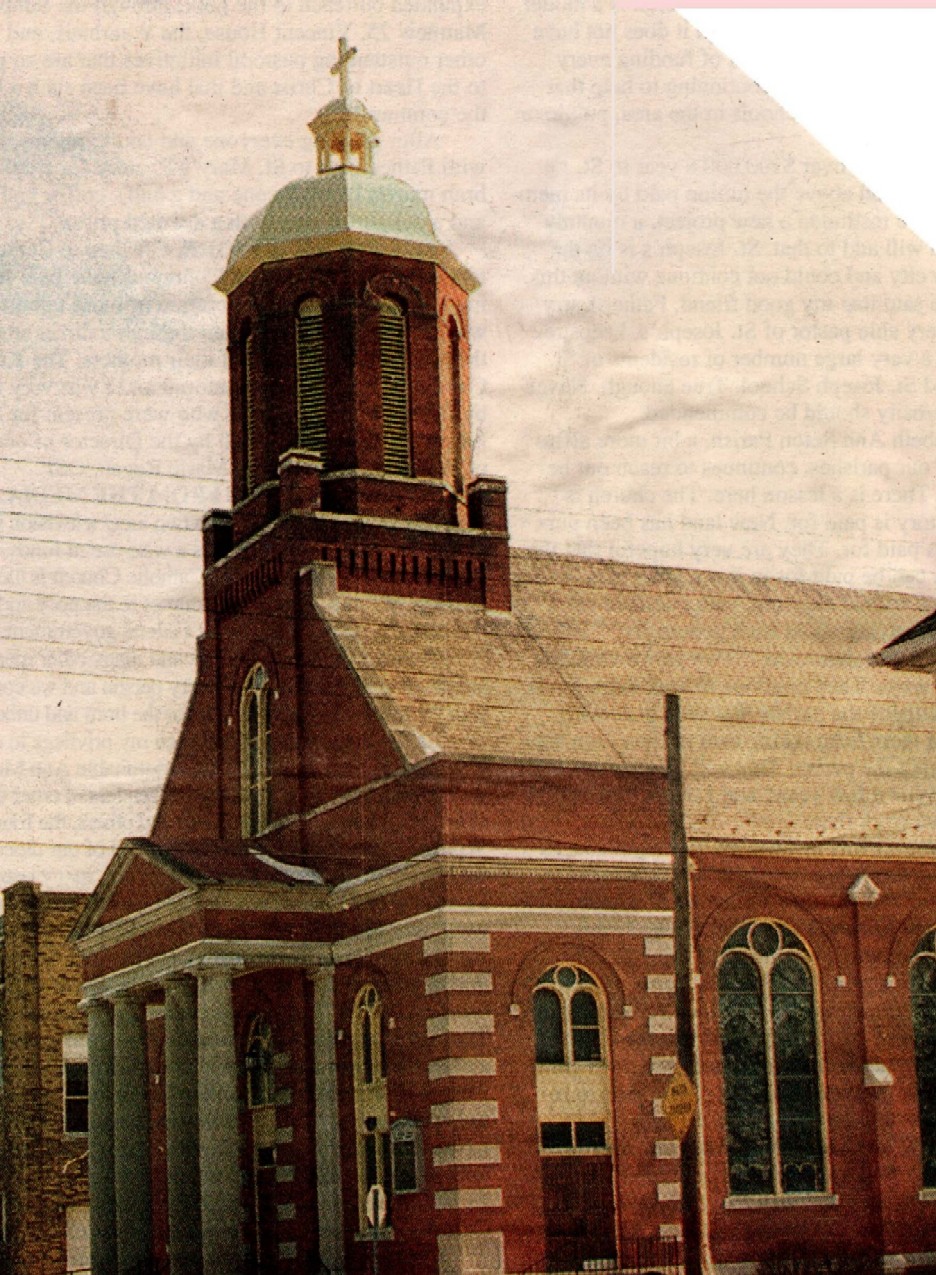
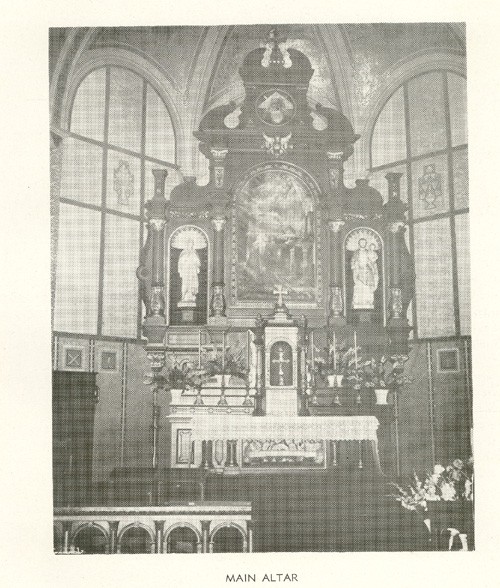
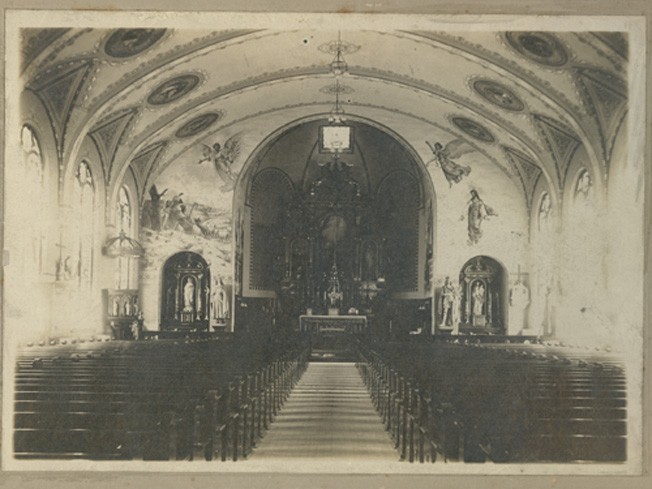
The new St. Stephen’s Church was completed in 1910 and far surpassed the original chapel in size. The brick-and-stone building was considered one of the most beautiful Catholic churches in South Bend. Its façade was adorned with four monumental stone columns, above which rose a 121-foot-tall, octagonal bell tower. The interior was adorned with paintings depicting the life of King Saint Stephen and biblical scenes, and the steel-framed building provided seating for approximately 1,400 people, ensuring that every worshipper had an unobstructed view of the main altar. The consecration of the church once again became one of South Bend’s greatest Catholic celebrations: Catholic associations from Hungary, Poland, Belgium, and other countries participated in the procession, and the press reported the presence of some 150 priests.
Behind these spectacular successes, however, the problems that would lead to a serious crisis a few years later were already beginning to emerge. The construction of the new church demanded an enormous financial sacrifice from the community. In 1910, the South Bend Tribune reported that a building materials dealer had filed a lawsuit against Bishop Alerding and János Frönlich over unpaid building materials and had requested that a lien be placed on the church. Although the case ultimately did not derail the construction project, it clearly demonstrated that the significant debts and the issue of asset management were causing increasingly serious tensions. Since the parishioners viewed the new church as the result of their own sacrifices, the issues of ownership and management took on significance for their identity: more and more people began to ask who had authority over the church built by the Hungarians, and to whom the pastor was accountable. A few years later, these conflicts culminated in a crisis centered on Viktor Kubinyi, which divided the Hungarian Catholic community in South Bend for a long time.
However, the community’s development did not end with the construction of the new church. On the contrary: even at that time, behind the spectacular successes, tensions were already emerging that would lead, within a few years, to the most serious crisis in the history of the Hungarian Catholic community in South Bend. The construction project left behind significant debt, while the parishioners felt that, since the church had been built through their own sacrifices, they too had a right to have a say in its financial management and the administration of its assets. The issue of ownership of the church and the role of the lay trustees gradually led to increasingly heated disputes.
The conflict truly deepened following the departure of János Frönlich, during the tenure of Pastor Viktor Kubinyi. Personal conflicts were compounded by moral accusations, disputes over the church’s leadership, and disagreements with the diocese. The crisis ultimately led to a schism in 1911: some of the faithful sided with Viktor Kubinyi, while others supported the decision of the bishop of Fort Wayne. When no agreement could be reached, the group following Kubinyi broke away from the Roman Catholic Church and founded the Independent Hungarian Catholic Sacred Heart Church, which later joined the Polish National Catholic Church of America. The schism significantly weakened the Hungarian Catholic community in South Bend; however, St. Stephen’s Parish ultimately preserved its unity, and the majority of the faithful remained within the Roman Catholic Church.
Resolving the crisis took a long time. Following Kubinyi’s departure, Lajos Kovács took over as pastor, but he remained in office for only eight months, as he was unable to reconcile the opposing sides. He was succeeded by Sándor Várlaky, who led the parish for two years, after which György Horváth, a priest at Notre Dame University, temporarily provided pastoral care for the Hungarian congregation. Although these years did not bring any spectacular progress, they succeeded in stabilizing the parish’s operations and bringing the most difficult period of the schism to a close.
In 1916, Lőrinc Horváth became the parish priest, and his tenure marked another turning point in the history of the Hungarian community in South Bend. By then, a Hungarian community had grown so large in the southern part of the city that it became necessary to establish a second Hungarian Catholic parish. That same year, Lőrinc Horváth founded the Our Lady of Hungary parish, which from then on served the Hungarian faithful in the southern part of the city. Thus, for many decades, South Bend had two independent Hungarian Catholic parishes, which clearly illustrates the size and organization of the local Hungarian community. During the transitional period, Pál Miller, a priest from the University of Notre Dame, provided pastoral care at St. Stephen’s Church.
In the early 1920s, under the leadership of Pastor Frigyes Wenckheim, the parish began to flourish once again. He paid special attention to Hungarian Catholic education: he invited the sisters of the Congregation of the Daughters of Divine Love, who took over the management of the school, and in 1925 he had a new school building constructed for the parish. He was assisted in his work by Chaplain Charles Scholl. The school was not only an educational institution but also became one of the most important centers for the preservation of the Hungarian language and identity.
In 1927, a new era began in the history of the parish when the bishop of Fort Wayne entrusted the leadership of the parish to the Franciscan Order of Transylvania. The first Franciscan pastor was Lőrinc Bíró, OFM, and his assistant pastor was Tarzicius Kukla, OFM. A few years later, Kukla took over the leadership of the parish, assisted in his work by Fitzsimmons, OFM; Teofil Thiel, OFM; John Woods, OFM; and Arkangyal Bónis, OFM. The Franciscans led the St. Stephen Parish for nearly a decade and a half, placing great emphasis on Hungarian-language pastoral care, parish life, and the education of young people. Despite the hardships of the Great Depression, they managed to keep the parish and the school running.
In 1939, the parish once again came under the administration of the diocese. The bishop appointed Konrád Suelzer as parish priest, with József Horváth serving as his assistant priest. In 1944, József Horváth succeeded him as head of the parish, and he was assisted in his work by János Homkó, Elemér Rupp, Herbert Renner, and later Pál Hanyicska. During the years of World War II, the church served as not only a spiritual center for Hungarian parishioners but also one of the most important symbols of their national unity. A particularly significant moment in this history occurred in 1947, when Cardinal József Mindszenty visited St. Stephen’s Church in South Bend during his trip to the United States, an event that remains a lasting memory for the local Hungarian community.
In 1951, Gedeon Péterffy—known in the United States as Elmer Peterson—succeeded József Horváth as parish priest. During his more than four decades of service, the parish faced new challenges in its history. The influx of new Hungarian immigrants gradually dried up, the older generation passed away, and the younger generation increasingly assimilated into American society. The use of the Hungarian language declined, while Spanish-speaking Catholic families moved into the western part of the city in ever-greater numbers. As a result, the church was gradually shared with Spanish-speaking parishioners, who also held their services there. Gedeon Péterffy strove throughout to preserve Hungarian traditions, while at the same time adapting to the community’s changing composition. A significant event toward the end of his ministry was the 1992 visit by Bishop Attila Miklósházi, which strengthened the bond between the Hungarian pastoral ministry and the community in South Bend.
After Gedeon Péterffy’s death in 1993, the parish no longer had a dedicated Hungarian pastor. David J. Porterfield, C.S.C., and Christopher Cox, C.S.C., took over the care of the parishioners, while the size of the Hungarian community continued to decline. The Diocese of Fort Wayne–South Bend ultimately dissolved the St. Stephen Parish on May 31, 2003, due to the low number of parishioners and the deteriorating condition of the building, and its territory was annexed to the parishes of St. Adalbert and St. Casimir. The church building was demolished in 2004, and the land was donated for community purposes, while social service agencies continued to operate in the parish school building.
St. Stephen’s Church in South Bend played a defining role in the religious and community life of Hungarian Americans for more than a century. Its history vividly illustrates the arc of development of Hungarian Catholic parishes in the United States: the immigrants’ self-sacrificing efforts to build a church, the establishment of independent institutions, the overcoming of internal conflicts, and finally the decline resulting from natural assimilation and demographic changes. Although the church itself no longer stands, its memory remains one of the most important historical legacies of the Hungarian Catholic community in South Bend.