Kassa, Austro-Hungarian Monarchy, currently Košice, Slovakia — July 4, 1875
Death data:
Toledo, OH, USA — April 6, 1955
Denomination:
Roman Catholic
Ecclesiastical status:
diocesan
Diocese / Order:
Kalocsa-Kecskemét (korábban Kalocsa, Kalocsa-Bács) (1920-ig) → Toledo, OH, USA
Ordination level:
priest
Priestly ordination:
November 18, 1897
Place of burial:
Calvary Cemetery
Toledo, OH, USA
Biographical data
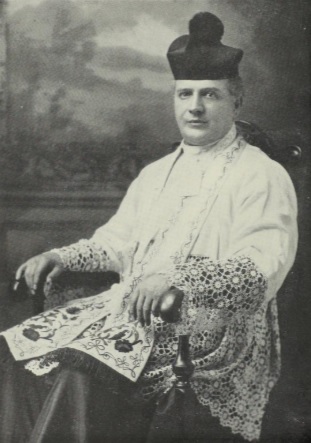
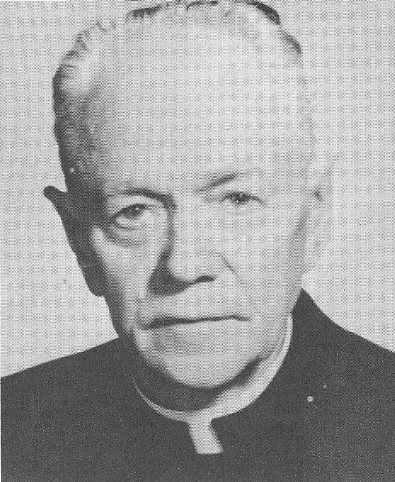
Elemér Géza Eördögh was ordained a priest on November 18, 1897. In addition to his studies at the seminary in Kalocsa, he earned a university degree and subsequently served in several parishes in Hungary with populations that were partly German and partly Slovak. In Nagybánya, he served as tutor to the sons of Count Vilmos Pongrácz while pursuing legal studies in Budapest. After serving as chaplain in Miskei and Kishegyes, he became parish priest in Bácsújfalu and later in Futak.
In 1911, during disciplinary proceedings brought against him by the Holy See, he left Hungary. He arrived in the United States on August 31, and from 1911 to 1913, he served the Slovak Catholic congregation in Throop, Pennsylvania. In 1913, he was appointed pastor of the Hungarian Roman Catholic parish of St. Stephen the King in Toledo, which he led until his death. Under his leadership, the construction of the church and its associated institutions was completed, and the parish became one of the most important religious, educational, and cultural centers in Toledo’s Hungarian neighborhood known as Birmingham.
He devoted great attention to preserving the Hungarian language and identity. According to his account, by 1927 every student at the parish’s eight-grade school spoke Hungarian. Working in collaboration with local Reformed and Greek Catholic pastors, he promoted cooperation among the Hungarian denominations in Toledo.
He became a nationally recognized leader of the Hungarian American community. He was one of the initiators of the 1931 “Justice for Hungary” transatlantic flight and served as chairman of its organizing committee. He played a key role in securing Lord Rothermere’s support and in establishing the financial and social foundation for the venture. In 1929, he was granted the title of papal prelate, and in 1937, he was awarded the Middle Cross of the Order of Merit of Hungary.
In 1938, as head of the Hungarian delegation to the United States, he participated in the International Eucharistic Congress in Budapest, and, representing the Second World Congress of Hungarians, he greeted Regent Miklós Horthy. In 1939, he was appointed the American representative of the Saint László Society.
Following the German occupation of Hungary on March 19, 1944, he returned his Hungarian state decorations to Miklós Horthy in protest and publicly condemned the Nazi persecutions. At the same time, he emphasized his patriotic commitment to the United States: in 1943, he purchased $1,000 worth of U.S. war bonds.
He celebrated his golden jubilee on November 16, 1947. In the final years of his life, due to his health, his assistant priests took over a significant portion of his duties. He passed away on April 6, 1955, in Toledo and was laid to rest in the city’s Calvary Cemetery.
Domestic service locations
From
To
Place i
Current name, country i
Church / institution
Position
1897
1899
Nagybánya, Austro-Hungarian Monarchy
Baia Mare, Hungary
He served as a tutor to the sons of Count Vilmos Pongrácz while studying at the Faculty of Law in Budapest