Budapest, Austro-Hungarian Monarchy, currently Hungary — August 13, 1909
Death data:
Phoenix, AZ, USA — April 7, 1977
Denomination:
episzkopális
previously: Roman Catholic (1949-ig)
Ecclesiastical status:
religious
Diocese / Order:
kapucinus (Ordo Fratrum Minorum Capuccinorum)
Ordination level:
priest
Entry into religious life:
September 9, 1933
Perpetual vows:
ismeretlen
Priestly ordination:
ismeretlen
Place of burial:
Saint Francis Cemetery
Phoenix, AZ, USA
Other name used:
Rev. George Paul Hetenyi
Biographical data
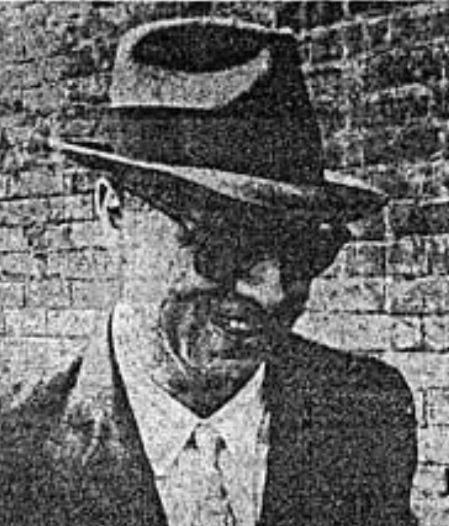
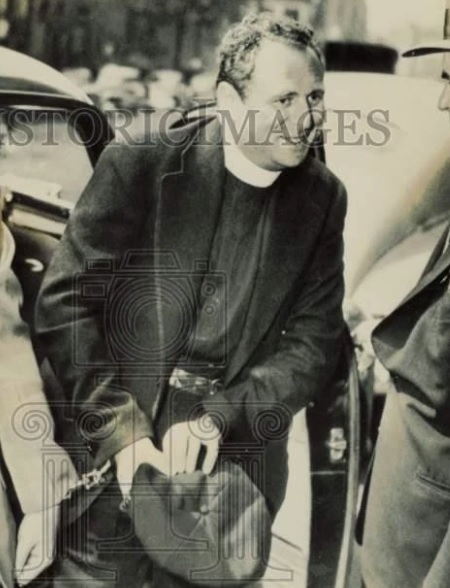
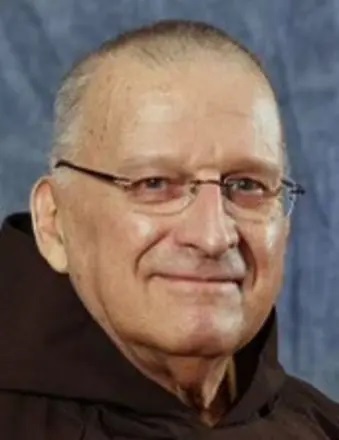
A Capuchin friar of Hungarian descent, a Roman Catholic priest, later an Episcopalian, and at one time an Orthodox pastor. The American chapter of his life became well-known due to the death of his wife in 1949 and the subsequent criminal proceedings that lasted for more than a decade and a half. His case became one of the landmark constitutional cases in the United States regarding the prohibition against double jeopardy.
His original surname was “Hirsh,” which he Hungarianized to Hetényi at an unknown date. He entered the Capuchin Order on September 9, 1933. The order’s 1935 directory listed him as a fifth-year theology student, suggesting that he had been pursuing theological studies even before joining the order. The exact date of his ordination to the priesthood is not yet known.
In the second half of the 1930s, he moved to North America. According to the Order’s registers, he served in Toronto in 1938 and in Windsor in 1939. In 1940, he was assigned to the United States, where he worked at St. Stephen’s Roman Catholic Parish in Chicago. His name no longer appears in later Capuchin directories from the 1940s, so the end of his service in the Order can be dated to this period.
In the United States, he lived under the name George Paul Hetenyi. He became a U.S. citizen in 1947. After breaking with the Roman Catholic Church and the Capuchin Order, he served as an Episcopal minister; according to some sources, he also served as an Orthodox priest for a time. He also engaged in itinerant pastoral work. In his car, he kept a folding altar, a portable organ, and other liturgical equipment, which he used to conduct worship services in various locations.
On August 16, 1946, in Oakland, California, he married Jean Gertrude Rose Gareist, a graduate of the University of California and a concert violinist who also played in the Oakland Symphony Orchestra. They had two children. In 1949, the family lived in Amherst, New York, in the Allenhurst Gardens housing complex.
Jean Hetenyi disappeared in April 1949. Her body was found on April 23, 1949, in the Genesee River near Rochester. She had been killed by two .25-caliber gunshots. The investigation soon led investigators to suspect her husband. During an examination of Hetenyi’s car, bloodstains and a bullet were found; ballistic analysis indicated that the bullets found in the car and in the victim’s body were fired from the same weapon. The murder weapon was never recovered, and the evidence against him was largely circumstantial.
On May 19, 1949, a Monroe County grand jury indicted him for first-degree murder. His first trial took place in December 1949. The jury found him guilty of second-degree murder, and in January 1950, he was sentenced to imprisonment for a term ranging from fifty years to life. The verdict was later overturned.
In the second trial, he was again charged with first-degree murder; this time, he was found guilty and sentenced to death. The New York Court of Appeals overturned this verdict. He was brought to trial a third time; on this occasion, he was again found guilty of second-degree murder and sentenced to a prison term ranging from forty years to life.
For years, Hetényi challenged the legality of the proceedings, arguing that since the first jury had found him guilty only of second-degree murder, the state could not have brought him to trial again on a first-degree murder charge in subsequent proceedings. His case was ultimately brought before the United States Court of Appeals for the Second Circuit under the title United States of America ex rel. George Hetenyi v. Walter H. Wilkins, Warden of Attica State Prison. The case was heard on March 12, 1965, and the decision was rendered on July 13.
The majority opinion was written by Federal Judge Thurgood Marshall, who later served on the United States Supreme Court. The court found that the State of New York had violated Hetényi’s constitutional rights by prosecuting him again for first-degree murder following the initial trial. According to the ruling, although the first jury did not explicitly acquit him of the first-degree murder charge, the state had already attempted to secure such a conviction once and failed. The court therefore ruled that the new trial on a more serious charge was fundamentally unjust and violated his right to due process guaranteed by the Fourteenth Amendment. The federal court ordered that Hetényi be released unless the State of New York provided him with a new trial that met constitutional requirements within a reasonable time.
Instead of another full trial, a plea agreement was ultimately reached. Hetényi pleaded guilty to a lesser charge of manslaughter by negligence. The long time he had already spent in prison was credited toward his sentence, and he was released on June 6, 1966. Upon his release, he stated that he intended to enter a monastery and live a monastic life. This ultimately did not come to pass.
He later remarried; in 1969, he married Maria Hendrika Stolle. He spent the final years of his life in Arizona. He died in Phoenix on April 7, 1977, at the age of 67. He was buried at Saint Francis Cemetery in Phoenix.
György Hetényi’s life took an extraordinary turn, diverging from the typical path of Hungarian monks and priests who had come to North America between the two world wars. He began his ministry in North America as a Hungarian Capuchin friar and Catholic priest, then changed denominations, started a family, and ultimately spent many years in prison for the murder of his wife. His case, however, goes beyond his personal story: the 1965 Hetenyi v. Wilkins decision became one of the most notable cases in American constitutional law concerning the relationship between retrial and due process.
Hetényi György Bonaventura OFMCap: personal record. In: Historical directory of Hungarian, Hungarian-descended, and Hungarian-speaking clergy serving abroad. Available at: https://www.diaszporalelkipasztorok.hu/persons_v2/view.php?id=388 (accessed: 2026-09-13).
Last modified: August 12, 2026 22:58 |
Opened: 8 times