Sármellék, Austro-Hungarian Monarchy, currently Hungary — May 5, 1908
Death data:
Montevideo, Uruguay — July 24, 1983
Denomination:
Roman Catholic
Ecclesiastical status:
religious
Diocese / Order:
szalézi (Societas Sancti Francisci Salesii)
Ordination level:
priest
Entry into religious life:
Rákospalota, Kingdom of Hungary, currently Budapest - VI. kerület, Hungary — May 20, 1927
First (temporary) vows:
August 15, 1928
Priestly ordination:
Cordoba, Argentína — November 27, 1938
Biographical data
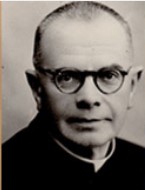
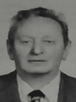
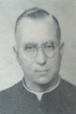
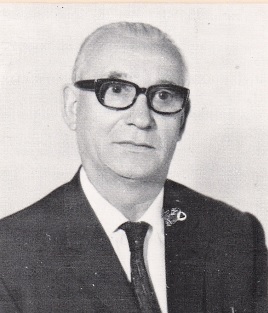
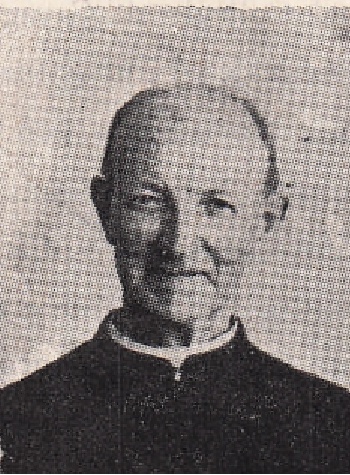
His father, Ignác Proszt, was a cantor and teacher; his mother’s name was Vilmá Varga. His brother became a Carmelite monk. János Proszt, SDB (Sármellék, May 5, 1908 – Montevideo, Uruguay, July 24, 1983) was a Hungarian Salesian priest, missionary, and pastor to the Hungarian émigré community in South America. His father was Ignác Proszt, a cantor and teacher; his mother was Vilma Varga. He was raised in a religious family, where the idea of pursuing a priestly vocation arose even during his childhood. He originally intended to become a Salesian brother, so he learned the shoemaking trade in Keszthely, and then on May 20, 1927, he entered the Clarisseum in Rákospalota. He began his novitiate in August, took the habit on December 8, and made his first religious vows on August 15, 1928. His superiors saw in him a calling to the priesthood, so he pursued theological studies and was ordained a priest on November 27, 1938, in Córdoba, Argentina.
Even as a young religious, he volunteered for missionary work and was sent to Argentina in 1931. He arrived in Patagonia on November 6, where he began his ministry in the Salesian missions. He worked for more than thirty years in the Salesian Works in Patagonia, primarily providing pastoral care to indigenous peoples and the faithful living in isolated communities. Although few details of this period have survived due to his modest nature, his memoirs reveal that he considered this to be the most beautiful and fruitful period of his life. He took particular delight in preserving the traditions of the Patagonian missions and venerating Ceferino Namuncurá, who was of indigenous descent.
On March 11, 1962, at the behest of his superiors, he was transferred to Uruguay, where he continued his ministry as a Hungarian pastor (missionarius cum cura animarum) appointed by the Holy See, based in Montevideo. He also worked in Brazil for a short time, then returned to serve in Montevideo. During his nearly twenty years in Uruguay, he conducted more than three hundred Hungarian funerals, while recording only 106 baptisms, which clearly illustrates the aging of the émigré community. In his letters, he wrote repeatedly about the fate of the dwindling Hungarian community and his concern that no Hungarian priest would remain in the country after his departure.
Letter: “My fate is a bit sad, for my main task is conducting funerals! One after another, I accompany our aging compatriots to the cemetery. They weep, begging me not to leave them here—for then who will accompany them on their final journey?! Even the Reformed Protestants ask this of me. So I go about my business patiently, like a pitcher to the well! One day, I’ll be the one left behind! I feel as though there’s no point left. The work is getting a little harder now—it’s no wonder, since I’m 71 years old. My consolation is that even if I work a little less now, thanks to the good Lord, I did my share for 30 years in Patagonia! I’ve been here for 17 years.” (Service, 43, 87.)
In the final years of his life, his health deteriorated significantly: he struggled with heart disease, his eyesight weakened considerably, and he spent extended periods in a sanatorium on several occasions. Nevertheless, he continued to serve his flock to the best of his ability. In 1981, he even attended the 50th-anniversary reunion in Argentina of the class with which he had once arrived on a mission to Patagonia. In his final letter, he bid farewell to his acquaintances, writing that by the time his words reached them, he hoped to already be “at home” in the eternal homeland. He passed away on July 24, 1983, in Montevideo. He dedicated his entire life to the spirituality of Don Bosco, to missionary service, and to the pastoral care of the Hungarian community in South America.
Foreign service locations
From
To
Place
Current name, country
Church / institution
Position
1931
1962
Patagónia, Argentína
pastor (Salesian Works)
1953
Brazília
pastor
1962
1983
Montevideo, Uruguay
Hungarian pastor, missionary with responsibility for the care of souls
Literary activity
Kéziratban megőrzött emlékei épületes olvasmány saját gyermekkoráról és epizódokban bemutatott nevelői tapasztalatáról.
Proszt János SDB: personal record. In: Historical directory of Hungarian, Hungarian-descended, and Hungarian-speaking clergy serving abroad. Available at: https://www.diaszporalelkipasztorok.hu/persons_v2/view.php?id=901 (accessed: 2026-09-13).
Last modified: July 24, 2026 13:54 |
Opened: 28 times