Ajak, Austro-Hungarian Monarchy, currently Hungary — May 4, 1886
Death data:
Rio de Janeiro, Brazília — November 24, 1955
Denomination:
Roman Catholic
Ecclesiastical status:
religious
Diocese / Order:
szalézi (Societas Sancti Francisci Salesii)
Ordination level:
priest
Entry into religious life:
1903 circa
Priestly ordination:
August 5, 1914
Place of burial:
Cemitério de São Francisco Xavier
Rio de Janeiro, Brazília
Other name used:
Csezerovics, Baltasar Czezarovits
Biographical data
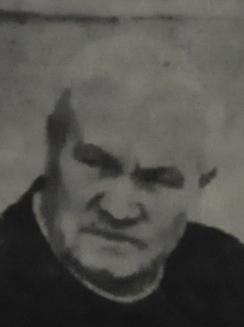
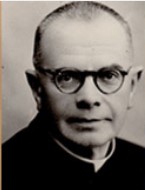
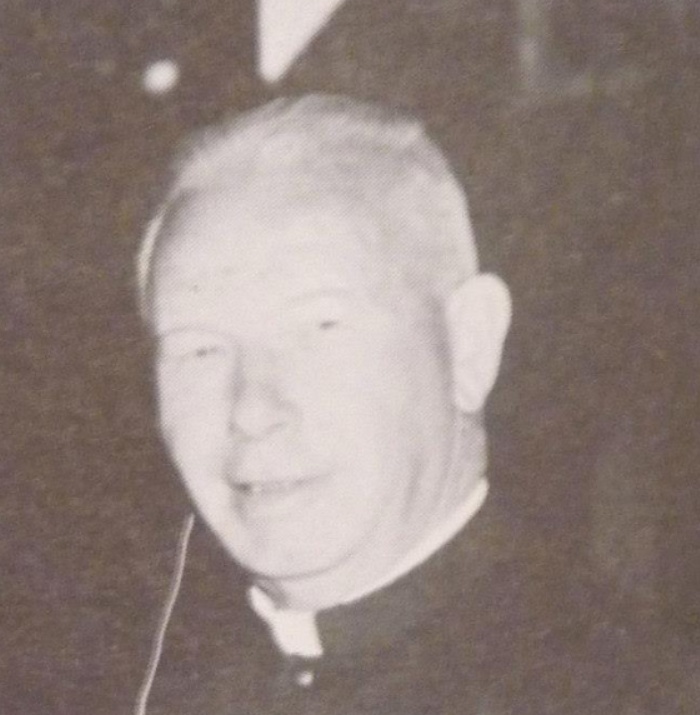
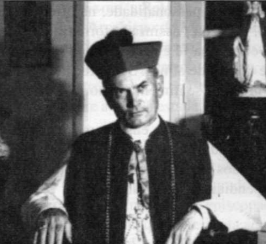
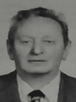
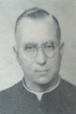
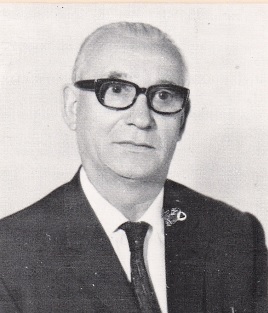
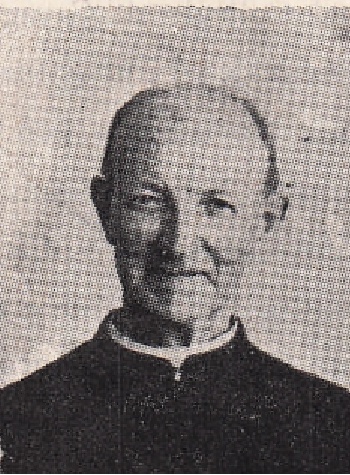
He was a Roman Catholic priest of Hungarian descent, a Salesian priest, a missionary, a teacher, and the pastor of the Hungarian community in Brazil.
He was born in Ajak as the youngest child of János Czezárovits and Barbara Szapkó, a farming family. He had six older brothers and one older sister. His parents raised him in a religious manner and, recognizing his talents, ensured he received an education; according to the Salesian Order’s obituary, he graduated from the state high school with excellent grades. From childhood, he served as an altar boy at the church in Ajak and developed a close relationship with the local parish priest, who was a member of the Salesian community. It was from him that he received a copy of the *Salesian Bulletin* to read, which introduced him to the work of Don Bosco and the Salesian vocation.
At the age of seventeen, in 1903, he entered the Salesian institute in Cavaglia, northern Italy. He completed his novitiate in Lombriasco in 1905, where he received the cassock from Don Michele Rua, then Superior General of the Salesian Order. He took his first temporary religious vows in 1906. He spent his years of practical training as a teacher in Cavaglia and San Benigno Canavese; in the latter, he also served as secretary to János Antal, the Salesian universal catechist. According to the Order’s records, he already stood out at that time for his talent in mathematics, his patience with the students, and his pedagogical instincts.
He continued his theological studies in Foglizzo from 1911 to 1914. On August 5, 1914, he was ordained a priest by Bishop Matteo Filipello of Ivrea. After completing his studies, he himself asked his superiors to be sent on a mission, and that same year he was sent to the state of Mato Grosso in Brazil.
His first major posting in Brazil was in Cuiabá, the capital of the state of Mato Grosso. He was entrusted with the management of the Salesian mission’s meteorological station. According to the order’s records, this was the only station of its kind in the region at the time, and the weather reports he prepared were used in both river navigation and agriculture. Later, he taught mathematics, physics, and chemistry. His interest in the natural sciences remained with him throughout his life: he helped organize a natural history museum, performed astronomical, meteorological, and mechanical calculations, and repaired various instruments.
After a few years, he was transferred to the Salesian province in Brazil named after Our Lady Help of Christians. For a long time, he taught mathematics, physics, and chemistry, including in the state of São Paulo. His order’s obituary remembered him as a consistent, highly disciplined teacher who, at the same time, explained concepts clearly and vividly. Based on the available sources, the complete chronology of his various transfers cannot yet be reconstructed, but he certainly served in Cuiabá, São Paulo, and Lorena.
In 1932, he was appointed catechist at the Salesian house in Lorena, a position he held until 1934. To support the financially strained house, he celebrated Mass daily for four years at the Church of St. Francis of Paola, using the donations he received there to sustain the community. Later, for four years, he also served as chaplain at a military hospital, where he was held in high esteem by both the patients and the staff.
In addition to his duties as a Salesian teacher and member of the order, he provided pastoral care for Hungarians who had emigrated to Brazil for a long time. He visited Hungarian communities living in the state of São Paulo and the region of Santa Catarina, celebrating Mass for them, hearing their confessions, and providing spiritual and social assistance. According to a Hungarian summary from the 1930s, Ferenc Némái, together with retired Army Colonel Ferenc Némái, carried out “apostolic work” to assist Hungarian immigrants in São Paulo who had fallen on hard times. According to the report, following the political unrest, many Hungarians found themselves in financial ruin, and their good reputation was also at risk; Czezárovits, in addition to providing spiritual care for those in need, also participated in representing their social interests.
His name was mentioned in the 1934 registry of Hungarian Catholic missions in connection with São Paulo, and in 1946, he was still listed among the Hungarian Salesian missionaries serving in Brazil, alongside László Auer and József Domitrovics. This shows that his service in Brazil was not a brief missionary assignment, but rather a life’s work spanning more than four decades.
At the last major post of his life, he served as chaplain to the novitiate of the Sisters of Divine Providence. He handed over this duty about two years before his death due to his deteriorating health. Because of his gray hair and fatherly demeanor, the novices affectionately called him “nonnó,” meaning “grandfather.” As long as his strength permitted, he continued to celebrate Mass and hear confessions; when he came to require constant assistance, his Salesian confrere Giuseppe Lanna cared for him.
Balázs Czezárovits passed away on November 24, 1955, in Rio de Janeiro, at the age of sixty-nine. Upon hearing of his death, his fellow Salesians, the nuns he had cared for, his penitents, and representatives of the military hospital all bid him farewell. His body was laid in state in the parish church, where a funeral Mass was celebrated at 4:00 p.m. His funeral procession was accompanied by a long motorcade and members of the Salesian college in Niterói to the cemetery in the Caju neighborhood. The “Cajú Cemetery” mentioned in the Salesian source can be identified as the Cemitério de São Francisco Xavier cemetery complex in Rio de Janeiro; therefore, the two different names for the cemetery are not necessarily contradictory.
Foreign service locations
From
To
Place
Current name, country
Church / institution
Position
1914 after
Cuiaba, Mato Grosso, Brazília
Head of a weather station, then a teacher of mathematics, chemistry, and physics
1932
1954
Lorena, Brazília
catechist, and at the same time pastor to the Hungarian community in Santa Catarina and São Paulo, and later a military chaplain.
Czezárovits Balázs SDB: personal record. In: Historical directory of Hungarian, Hungarian-descended, and Hungarian-speaking clergy serving abroad. Available at: https://www.diaszporalelkipasztorok.hu/persons_v2/view.php?id=132 (accessed: 2026-09-13).
Last modified: August 5, 2026 16:16 |
Opened: 9 times